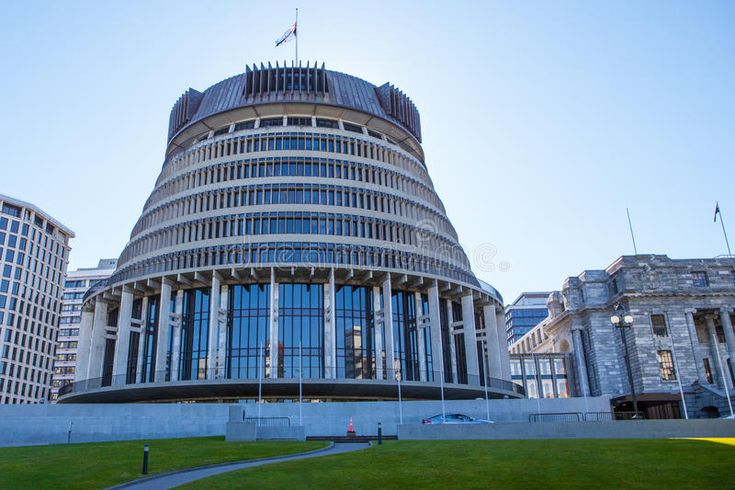
New Zealand hung Parliament prospects are rising sharply, according to a newly released poll that predicts no single political bloc would secure a majority if a general election were held today. The findings point to a highly competitive and uncertain political landscape, with both the centre-right and centre-left struggling to win outright control of the New Zealand Parliament.
Political analysts say this development indicates potential coalition negotiations and negotiations ahead, shaping the country’s policy direction on key domestic and international issues.
New Poll Signals Political Deadlock
The latest poll, conducted by a leading New Zealand research firm, suggests that neither the right-wing bloc — represented largely by the National Party and its allies — nor the left-leaning Labour Party and its allied progressive parties would secure the 61 seats needed for a majority in the 120-seat Parliament.
Under New Zealand’s Mixed Member Proportional (MMP) electoral system, coalitions and agreements between parties are commonplace. However, the new figures indicate that cooperation and compromise may be more essential than ever, as major parties fall short of the threshold required for unilateral governance.
Projections show the National Party bloc and the Labour bloc both hovering around similar seat counts, with smaller parties potentially holding the balance of power. The results suggest that voters are distributed across a wider range of political preferences, making coalition building a complex and pressing challenge for party leaders.
Implications for Coalition Politics
A New Zealand hung Parliament would compel major parties to engage in negotiations with smaller political groups to form a government. This dynamic could result in either a broad centre-ground coalition or an alliance that spans diverse political philosophies.
Smaller parties such as the Greens, New Zealand First, ACT New Zealand, and Te Pāti Māori are increasingly influential under an MMP landscape where they can act as kingmakers. Analysts say that their policy priorities — from climate action to economic reform — will be central to any coalition agreement.
Political commentator Dr. Emma Hartwell explained, “The latest poll underscores how fragmented voter sentiment has become. With no party on track to win a majority, coalition negotiation isn’t just likely — it’s essential.”
National Party’s Position and Strategy
The centre-right National Party has traditionally been one of the two largest parties in New Zealand’s political system. Recent poll projections show the National Party remaining competitive, but without a clear path to a majority without partnership.
National Party leaders have emphasised economic growth, tax reform, and law-and-order issues in their messaging. They have also signaled a willingness to work with like-minded parties such as ACT New Zealand to reach the required parliamentary threshold.
However, National’s ability to form a stable coalition will depend heavily on how smaller parties negotiate their positions and demands — a task that is likely to involve compromise on key policy platforms.
Labour Party’s Challenges in the Poll
The centre-left Labour Party, which has held government in recent years, is also facing a challenging electoral environment according to the latest projections. While Labour maintains a solid base of support, it has struggled to gain momentum and is unlikely to reach the 61-seat mark on its own.
Issues such as housing affordability, healthcare reform, and public sector performance have been central to voter concerns, with critics arguing that Labour’s policy responses have not sufficiently addressed public expectations.
Labour leaders have reiterated their commitment to social welfare, education investment, and climate leadership, and recent campaign messaging has sought to re-energise their base. But in a New Zealand hung Parliament, they too would need to seek allies — likely the Greens and other progressive parties — to secure a governing majority.
Smaller Parties Hold the Balance of Power
Smaller parties are emerging as potential kingmakers in a parliament without a clear majority. The Green Party, known for its climate and environmental focus, could be a pivotal partner for Labour, while ACT New Zealand — a libertarian-aligned party — could swing support toward the National bloc.
Te Pāti Māori and other emerging groups are also poised to influence coalition negotiations, particularly on issues related to indigenous rights, social justice, and regional development.
Political strategist James Sinclair noted, “In an era of fragmented political support, every seat matters. Smaller parties may find themselves in an unusually powerful position, able to shape the policy agenda in ways that major parties alone cannot.”
Voter Sentiment and Distribution
The poll results reflect a broader trend of rising voter dissatisfaction with traditional political binaries. Younger voters, urban constituencies, and diverse demographic groups are showing varied preferences, leading to less predictability in election outcomes.
Many voters cited economic uncertainty, housing pressures, and environmental issues as key drivers of their support. Other segments voiced strong opinions on immigration policy, healthcare access, and education reforms.
The wide distribution of political preferences suggests that future parliament negotiations could lead to hybrid policy agendas that blend economic pragmatism with social priorities.
Regional and Global Impacts
While the New Zealand hung Parliament situation is fundamentally a domestic political story, the implications extend to regional and global policy discussions. New Zealand’s strategic role in the Pacific, trade relationships, and regional security partnerships — including commitments through APEC and other forums — may be influenced by coalition priorities.
Policy shifts resulting from coalition agreements could impact New Zealand’s stance on climate diplomacy, trade negotiations, and foreign direct investment, particularly as global economies navigate post-pandemic recovery and geopolitical tensions.
What Comes Next in New Zealand Politics
With the poll indicating a potential hung parliament, political parties are preparing for strategic negotiations and outreach ahead of the next election or coalition talks. Analysts expect public debate to intensify around key policy differences, leadership vision, and partnership possibilities.
Party leaders may increase efforts to court potential allies, offering policy concessions or shared platforms to secure support. The coming weeks are likely to see heightened political engagement, campaign events, and strategic announcements as parties position themselves for negotiations.
In an era where voter preferences are increasingly nuanced, the outcome of the New Zealand hung Parliament scenario could set important precedents for future electoral behavior and governance structures.
This article is part of Ambuzzway World & Politics coverage, tracking global political trends, election forecasts, and governance developments. Details in this report are based on current political polling data published by RNZ and analysis from political commentators covering New Zealand’s evolving political landscape.