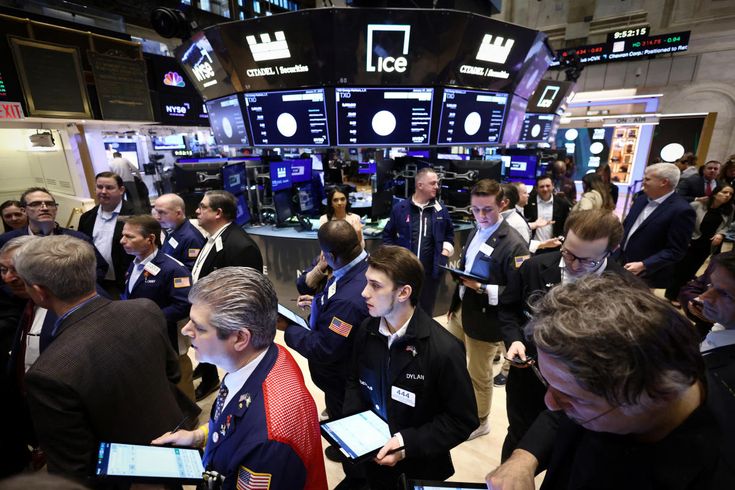

Global financial markets experienced a notable shift in sentiment today, with equities tumbling, long-term bond yields forecast to rise later in the year, and risk aversion influencing trading behavior. The Global Market Reaction reflects an environment where inflation expectations, interest-rate forecasts, and corporate earnings have created a backdrop of caution for investors across regions.
Across Asia and Europe, risk-off behavior has surfaced amid continued uncertainty over U.S. consumer price index (CPI) data, slowing technology stock momentum, and mixed corporate results — all of which collectively shaped today’s market action. This report breaks down the key drivers influencing markets and how investors are responding to an evolving macroeconomic landscape.
Equity Markets Under Pressure
Equity markets, particularly in major global hubs, showed signs of stress early in today’s trading session. In India, benchmark indices saw sharp declines — with the BSE Sensex and NSE Nifty 50 falling significantly as investors rotated away from equities amid renewed volatility.
Indian IT stocks — leaders of recent rallies — were especially hard hit as names like Infosys and Tata Consultancy Services (TCS) experienced double-digit percentage declines on international exchanges, reflecting concerns about global technology sector growth and competitive pressures from artificial intelligence (AI) disruptions.
The risk-off mood also spilled into broader Asian markets, where export-driven concerns and waning momentum added to bearish sentiment. While some regional indices showed pockets of resilience, the overall trend suggested that investors are reassessing portfolios and seeking shelter in safer assets.
U.S. Treasury Yield Outlook Shifts Investor Expectations
Another key factor shaping the Global Market Reaction was the forecast for U.S. Treasury yields. A Reuters survey released today indicates that long-term Treasury yields — particularly the 10-year note — are expected to rise over the course of the year due to persistent inflation concerns and ongoing fiscal pressures.
While short-term yields may ease slightly amid expectations of Federal Reserve interest rate cuts later in 2026, the outlook for long yields suggests investors are pricing in higher inflation and elevated risk premiums. A rising yield curve typically places downward pressure on equities — especially on growth stocks and higher-valuation sectors — as future earnings become less attractive when benchmark yields climb.
This yield environment has broad implications, slowing equities while making bonds more appealing in the short term. Investors seeking income may find long-duration instruments relatively more attractive now, particularly when compared with the latent risks seen in volatile stock markets.
Inflation Data and U.S. CPI Anticipation
A central element driving the Global Market Reaction today is the anticipation of the upcoming U.S. CPI report. Markets are currently pricing in lower inflation readings — with economists expecting both headline and core measures to show slower growth — which could influence Federal Reserve policy expectations.
While softer inflation might embolden rate-cut expectations later in 2026, the degree of deceleration in core components — especially rent and services prices — remains a concern. A hotter-than-expected CPI could keep rates elevated for longer and further pressure equity valuations. Analysts emphasize that housing and shelter costs will significantly influence the next policy moves.
The divergence between investor expectations and model-based nowcasts of inflation adds to uncertainty. If CPI prints cooler relative to forecasts, markets could briefly rally; however, lingering inflationary pressures could delay rate cuts and sustain risk aversion.

Sector Rotation and Defensive Positioning
In response to the broader selloff, many market participants are shifting capital into defensive sectors and safe-haven assets. Historically, utilities, consumer staples, and selected financial names maintain relative strength during risk-off periods as investors prioritize stable dividends and predictable cash flows.
Meanwhile, bond markets have seen increased demand as capital flows toward fixed income in search of yield and safety. This dynamic often correlates with equity selloffs — where fear of further downside prompts investors to rebalance portfolios toward bonds and away from equities.
Gold markets have shown heightened volatility amid these shifts, with significant intraday price swings signaling investor uncertainty and flight-to-safety trading behavior. Although precious metals typically benefit from risk aversion, unstable sentiment has complicated their performance.
Regional and Global Context
Outside of India and the U.S., other global financial centers reflected the Global Market Reaction. Asian equities, influenced by foreign capital flows and export demand uncertainty, showed mixed performance, while European markets were affected by weak economic data and slower growth signals.
Currency markets also responded, with funding flows toward currencies perceived as safe havens — often reflective of diminishing risk appetite. Although the yen experienced a resurgence this week due to political and trade developments, broader currency swings continue to mirror mixed macroeconomic signals across regions.
What This Means for Investors
For investors navigating the Global Market Reaction today, several themes have emerged:
- Heightened Risk Awareness: Shifts toward defensive assets and bonds suggest investors are bracing for further volatility.
- Inflation Sensitivity: With CPI data imminent, positions are sensitive to inflation measures and potential hawkish or dovish responses from central banks.
- Sector Diversification: Strong rotation out of high-growth tech sectors and toward defensive spaces highlights a cautious pivot in portfolio strategies.
- Yield Dynamics: Rising long-term yields could dampen equity outlooks while offering appeal to income-focused investors.
Maintaining diversified positions and monitoring macro data releases — particularly inflation and central bank guidance — will be crucial for navigating the near-term market environment.
Today’s Global Market Reaction reflects a cautious investor stance amid equity selloffs, adjusted bond yield forecasts, and inflation data anticipation. With cross-asset volatility and shifting expectations for monetary policy, financial markets are navigating a complex macroeconomic backdrop. Investors are balancing risk and defensive positioning as they await clearer signals from inflation reports and central bank guidance.
This report is part of Ambuzzway Finance coverage, incorporating market updates, macroeconomic surveys, and global equity performance data. Key insights are drawn from Reuters analysis on bond yield forecasts and market sentiment, and Asia and India stock market movement reports by Times of India and PublicInvest Research.