
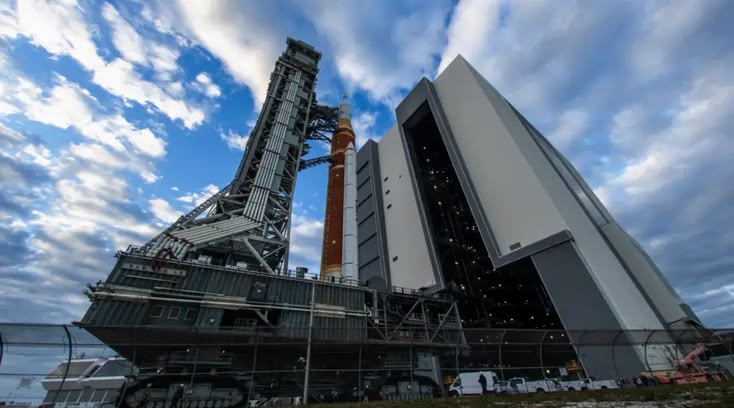
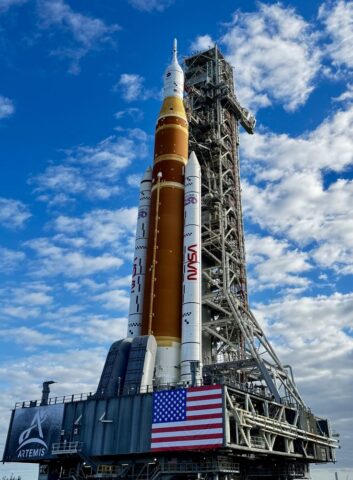
Artemis II launch marks a historic milestone for NASA’s lunar exploration program, representing the first crewed flight of the Artemis program. The Orion spacecraft, atop the Space Launch System (SLS) rocket, was rolled out to Launch Pad 39B at Kennedy Space Center on January 17th, 2026, and has since been undergoing rigorous pre-launch testing, including a crucial wet dress rehearsal. This mission will carry astronauts on a 10-day circumlunar flight, orbiting the Moon without landing, and returning safely to Earth.
The Artemis II mission is designed to validate the integrated performance of the SLS and Orion spacecraft while testing critical systems needed for long-duration lunar missions, including life support, avionics, power management, and advanced thermal protection.
Artemis II Mission Overview
The Artemis II mission will send astronauts around the Moon in Orion, testing operational readiness for future lunar landings. During this 10-day mission, crew members will deploy CubeSats in lunar orbit to relay optical transmissions from the far side of the Moon to Earth, helping validate communication technologies for future missions.
The mission’s objectives extend beyond orbital navigation. NASA will assess critical spacecraft systems, such as the European Service Module, Launch Abort System, and core stage propulsion systems, ensuring that all components function together under crewed conditions. This pre-flight testing is essential to support Artemis III, which aims to land astronauts on the Moon by 2027.
Wet Dress Rehearsal and Pre-Launch Testing
The Artemis II spacecraft recently completed a 49-hour wet dress rehearsal that began on January 31st, 2026. This rehearsal included loading and unloading cryogenic propellants into the SLS core stage and interim cryogenic propulsion stage. Cold weather delayed tanking operations, requiring engineers to bring propellant interfaces down to operational temperatures before proceeding.
During the final minutes of the rehearsal, a spike in liquid hydrogen leak rate automatically paused the countdown, and a previously replaced valve associated with the Orion crew module’s hatch pressurization required retorquing. Despite these minor delays, the rehearsal was successful, demonstrating readiness for the upcoming launch. NASA has updated the Artemis II launch window from February to March 2026, allowing ground teams to analyze data and conduct another rehearsal before liftoff.
Orion Spacecraft and SLS Configuration
The Orion spacecraft atop the SLS includes several critical components: the Orion Crew Module, the European Service Module, the Launch Abort System, and the spacecraft adapter, all enclosed by the second-stage panels. Beneath Orion sits the SLS rocket’s upper section, a next-generation super-heavy launch vehicle designed to send crewed spacecraft beyond Low Earth Orbit (LEO).
The SLS and Orion are undergoing integrated testing to verify that propulsion, navigation, communications, and safety systems work cohesively. These evaluations are essential to ensure the safety of the crew during Artemis II and subsequent Artemis missions.
NASA’s Long-Term Lunar Exploration Goals
The Artemis II mission is a stepping stone toward a sustained lunar exploration program. NASA plans to launch Artemis III by 2027, using a Human Landing System (HLS) to rendezvous with Orion in lunar orbit and land a two-person crew on the Moon for extended operations.
Beyond individual missions, NASA envisions establishing a regular cadence of lunar exploration, creating a sustainable presence on the Moon. This includes testing life support technologies, deep-space communications, and other innovations that will enable long-duration missions and potential lunar infrastructure development.
Advancing Deep-Space Exploration Technologies
During Artemis II, NASA will test technologies critical to future exploration of the Moon and beyond. These include:
- Life support systems: Ensuring astronaut health during extended missions.
- Avionics and navigation: Validating autonomous and manual control of the spacecraft.
- Thermal protection: Protecting the crew module from extreme temperatures during re-entry.
- Power systems: Assessing efficiency and reliability of spacecraft power distribution.
Additionally, CubeSats deployed during the mission will test communication relay from the far side of the Moon, a capability crucial for continuous operations in lunar orbit and potential surface missions.
Countdown to Launch
With the Artemis II launch now targeted for March 2026, NASA engineers continue to evaluate data from pre-flight tests and rehearsals. These assessments ensure that the crewed mission will meet all safety and operational standards.
The successful completion of Artemis II will pave the way for more complex missions, including lunar landings and long-term habitation, demonstrating NASA’s commitment to returning humans to the Moon and advancing humanity’s presence in deep space.
This article is part of Ambuzzway Astronomy coverage, reporting on NASA missions, space exploration developments, and lunar program updates. Details in this article are based on reporting by Universe Today and official NASA updates regarding the Artemis II mission and pre-launch preparations.