Sacred Valley airport development has become one of Peru’s most contentious infrastructure projects, stirring deep concern among Indigenous communities, conservationists, archaeologists, and local tourism operators as construction advances near one of the world’s most treasured cultural landscapes. While the Peruvian government argues the airport will modernize access and boost economic growth, critics warn that the damage to the Sacred Valley’s fragile environment and ancient heritage may already be irreversible.
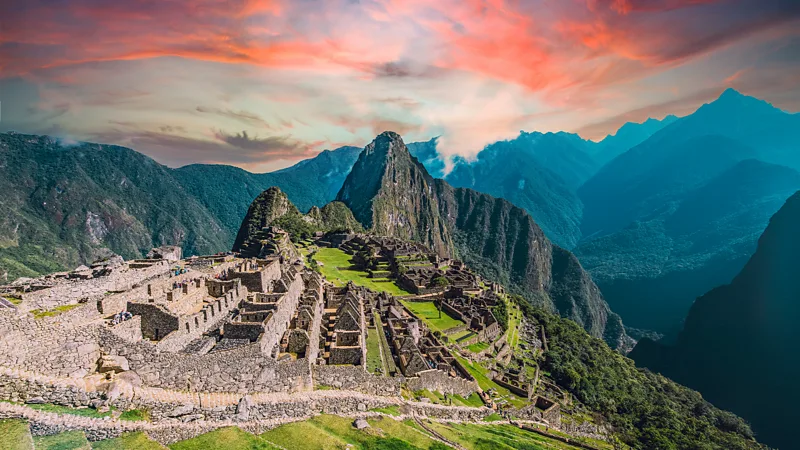
For centuries, Machu Picchu has been deliberately difficult to reach. The Incas chose its hidden perch high in the cloud forests of the Andes to protect it from intrusion. Even today, visiting the ancient citadel requires multiple connections — international flights to Lima, domestic travel to Cusco, long road or rail journeys through the valley, and a final steep ascent. This demanding route has acted as a natural filter, limiting mass tourism and preserving the site’s mystique.
That balance may soon change.
A New Airport at the Heart of the Andes
The proposed Chinchero International Airport, located near the historic Andean town of Chinchero, aims to dramatically shorten travel time to Machu Picchu. If completed, the airport would allow international travellers to bypass Lima and Cusco entirely, landing within close proximity of the Sacred Valley.
According to Peru’s Ministry of Transport and Communications, the project could handle up to eight million passengers annually, potentially increasing visitor numbers to the region by as much as 200%. Officials argue this would unlock economic opportunity in one of the country’s most underdeveloped areas, creating jobs and boosting income for communities reliant on tourism.
The project, estimated to have cost 2.3 trillion Peruvian soles so far, has already generated more than 5,000 construction jobs and is expected to benefit up to one million people working directly or indirectly in tourism-related sectors.
Yet for many residents, the promised benefits come with a heavy price.
Cultural Heritage Under Threat
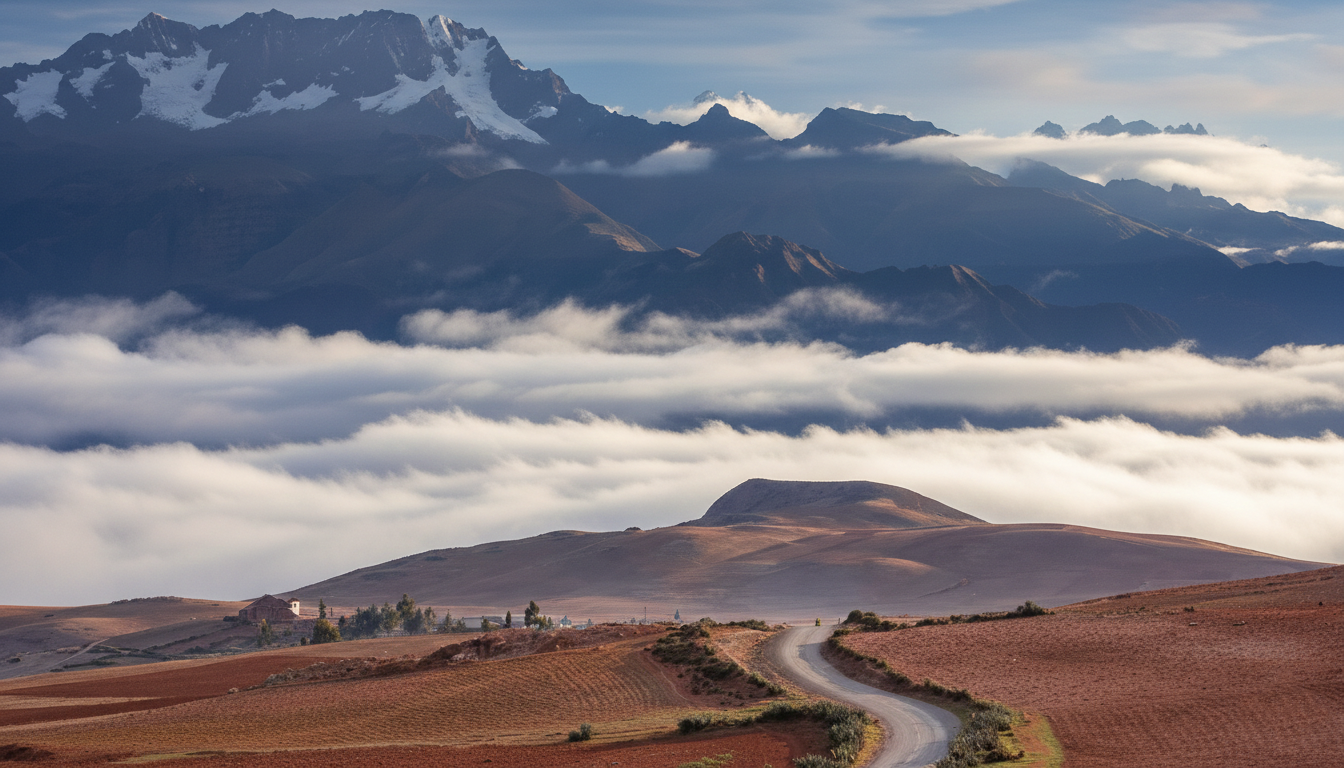
The Sacred Valley is far more than a scenic corridor leading to Machu Picchu. Carved by the Urubamba River and framed by the jagged Andes, it was the spiritual, agricultural, and administrative heart of the Incan Empire. Original Incan roads, irrigation systems, terraces, and salt mines remain in use today — a living heritage unmatched anywhere else in the Americas.
Opponents of the Sacred Valley airport argue that construction threatens pre-Incan and Incan archaeological sites, watersheds, wildlife habitats, and centuries-old agricultural traditions. They fear that rapid urbanisation around Chinchero and Urubamba will permanently alter the valley’s character.
Local guide Luis Flores, who grew up in the region, says the transformation is already visible. Since plans for the airport gained momentum, families have begun selling farmland that had been cultivated for generations. Fields once filled with corn, potatoes, quinoa, and beans are being replaced by concrete structures and speculative developments.
“Now there are houses everywhere,” Flores says. “With dozens of airplanes landing and taking off, that area is going to be completely different.”
Farming Traditions at Risk
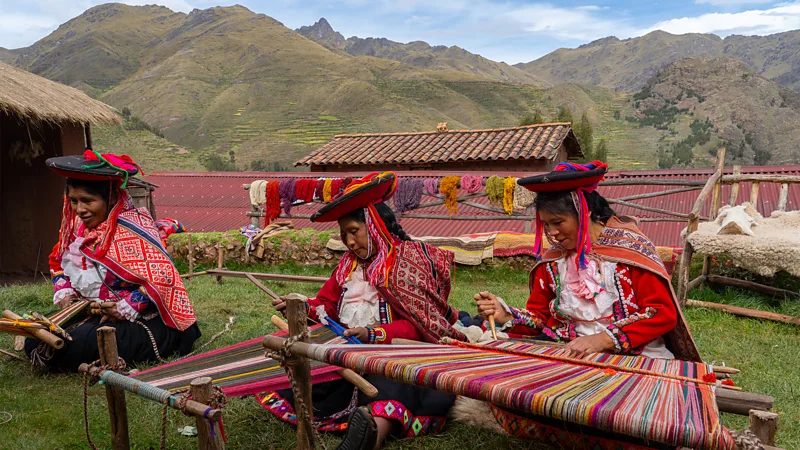
The Sacred Valley’s agricultural heritage is inseparable from its identity. Terraced fields supported by original Incan stone walls still preserve fertile soil, producing crops in vivid colours and varieties found nowhere else.
As land values rise, small-scale farmers are being pushed out, replaced by hotels, roads, and tourist facilities. Flores warns that increased demand for accommodation will accelerate this trend, reducing food security and eroding traditional knowledge passed down through generations.
For many locals, the airport represents not progress, but displacement.
Infrastructure Already Under Strain
Even supporters of tourism growth acknowledge that the region’s infrastructure is already stretched to its limits. Cusco’s existing road network is frequently gridlocked, particularly on weekends and during peak travel seasons. Some communities are experiencing water shortages, while waste management and recycling systems are severely overburdened.
Machu Picchu guide Lizbeth Lopez Becerra believes the issue is not tourism itself, but a lack of planning. She argues that a comprehensive impact assessment should be completed before opening the airport, warning that the region may not be equipped to handle a surge of visitors.
A full heritage impact assessment remained incomplete as of 2025, raising concerns among conservation groups and international observers.
Delays, Corruption Claims, and Uncertainty
The Sacred Valley airport has faced decades of delays. First proposed in 1978, the project has been plagued by funding shortfalls, construction setbacks, and allegations of corruption. Originally expected to open in 2026, officials now estimate completion in late 2027, though skepticism remains high.
Some long-term residents question whether the airport will ever become operational. Others argue that regardless of completion, the project has already reshaped land ownership patterns and development priorities across the valley.
As hotel owner Petit Miribel notes, discussions about a new airport have circulated for decades. “I’ve been hearing about it for 30 years,” she says. “The damage is already there.”
UNESCO and Overtourism Fears
UNESCO has repeatedly warned that poorly managed tourism could jeopardise Machu Picchu’s World Heritage status. Visitor numbers are currently capped between 4,500 and 5,600 per day, depending on the season. While those limits are not always reached, a dramatic rise in regional arrivals could push the site beyond sustainable levels.
Guide Efrain Valles Morales, who has worked in the Sacred Valley for 25 years, says the core issue is governance rather than visitor volume. “It’s a problem of tourism management,” he explains, pointing out that agreements to protect heritage often remain unenforced.
Morales believes travellers themselves can help by choosing experiences that keep tourism revenue within local communities and promote genuine cultural exchange.
Rethinking Tourism Beyond Machu Picchu
Some operators are already adapting. Guides are being trained to promote lesser-known attractions within one to two hours of the future airport, including Chonta Canyon, where Andean condors soar, the Killa Rumiyoq lunar observatory, and vast pre-Columbian agricultural terraces at Surite.
By diversifying tourism away from Machu Picchu alone, supporters hope to reduce pressure on the iconic site while spreading economic benefits more evenly across the region.
A Valley at a Crossroads
The Sacred Valley airport debate reflects a larger global challenge: how to balance economic development with cultural preservation and environmental responsibility. For Peru, the stakes are especially high. The Sacred Valley is not only a tourism engine but a living record of human history.
As construction continues and timelines remain uncertain, one thing is clear — the Sacred Valley is already changing. Whether the airport ultimately brings sustainable prosperity or irreversible loss will depend on decisions made now, long before the first plane lands.
This Ambuzzway Travel & Culture report draws on in-depth reporting by BBC Travel, alongside insights from local guides, conservation experts, and community leaders in Peru’s Sacred Valley. Additional context is informed by public statements from Peru’s Ministry of Transport and Communications and UNESCO heritage guidelines.