Hidden dimensions of the universe are once again at the center of scientific discussion as physicists revisit one of the most stubborn mysteries in modern cosmology — the hierarchy problem. The question at the heart of this debate is deceptively simple: why is gravity so much weaker than the other fundamental forces of nature?
While gravity governs the motion of planets, stars, and galaxies, it is astonishingly feeble when compared to electromagnetism or nuclear forces at the particle level. New theoretical work suggests that the answer may lie beyond the familiar three dimensions of space, in unseen dimensions that fundamentally reshape how gravity behaves.
Understanding the Hierarchy Problem in Physics
The hierarchy problem refers to the enormous gap between the strength of gravity and the other fundamental forces. Physicists have long known that nature operates through four fundamental interactions: gravity, electromagnetism, the strong nuclear force, and the weak nuclear force.
Although these forces differ in strength, three of them — electromagnetism, strong nuclear, and weak nuclear — exist within a relatively comparable range. Gravity, by contrast, is unimaginably weaker, separated by a gap so large that it challenges current theoretical frameworks.
At high energies, physicists have observed that forces can merge. The electromagnetic and weak nuclear forces unify at the electroweak scale, around 246 giga-electronvolts (GeV). Gravity, however, does not join this unification until energies reach the Planck scale — a staggering ten thousand trillion times higher.
This dramatic difference raises a troubling question: why does gravity behave so differently from the other forces?
Why Gravity Appears So Weak
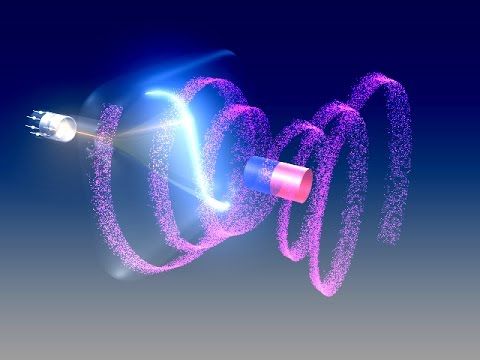
One possible explanation is that gravity only appears weak because it is spread across more dimensions than the other forces. While electromagnetism and nuclear forces may be confined to our familiar three-dimensional space, gravity could be leaking into hidden dimensions beyond our perception.
Physicists often use an analogy to illustrate this idea. Imagine living in a two-dimensional world, like ants moving across a flat surface. Everything that matters to you exists in that plane. A third dimension might exist, but you would have no awareness of it.
In the same way, humans may be confined to three spatial dimensions, while gravity operates across a higher-dimensional universe.
Large Extra Dimensions and Modern Physics
The concept of extra dimensions is not new. Early 20th-century physicists Theodor Kaluza and Oskar Klein first proposed an additional dimension to unify gravity and electromagnetism. Later, string theory expanded this idea, suggesting that the universe could contain many extra dimensions.
What makes the modern approach unique is the idea that these dimensions could be large — not microscopic at the Planck scale, but potentially as large as a fraction of a millimeter.
According to this theory, gravity spreads itself across all dimensions, diluting its strength in the three dimensions we experience. This would make gravity seem incredibly weak to us, even though it is fundamentally comparable to the other forces when viewed from the full multidimensional perspective.
Rethinking the Planck Scale
If gravity truly propagates through hidden dimensions, then the Planck scale may not be as extreme as it appears. Instead, it could represent the true energy scale only when the full structure of the universe is considered.
From our limited viewpoint — restricted to three dimensions — the Planck scale appears vastly larger because we are only seeing a thin slice of the complete universe.
This reinterpretation could resolve the hierarchy problem without invoking exotic new particles or fine-tuned parameters, making it an attractive theoretical solution.
Why Only Gravity Accesses Extra Dimensions
A natural question arises: if extra dimensions exist, why don’t other forces use them as well?
Physicists argue that gravity is fundamentally different from the other forces. According to Einstein’s theory of general relativity, gravity is not a force in the traditional sense but a manifestation of spacetime curvature caused by mass and energy.
Because gravity is tied directly to the geometry of spacetime itself, it may have access to dimensions that other forces — which rely on quantum fields — cannot reach. If electromagnetism or nuclear forces were able to spread into extra dimensions, their effects would be obvious in experiments, which has not been observed.
How Large Could Hidden Dimensions Be?
The idea of “large” extra dimensions might sound alarming, but physicists place strict limits on their size. If these dimensions exist, they must be small enough to have avoided detection in gravitational experiments.
Current models suggest that these dimensions could be as large as one-tenth of a millimeter. While that is extremely small by everyday standards, it is enormous compared to the Planck length.
The reason such dimensions remain hidden is simple: only gravity interacts with them. All matter and energy remain confined to our three-dimensional universe, making the extra dimensions invisible to conventional experiments.
Experimental Tests and Future Discoveries
The theory of hidden dimensions is bold, but physicists are committed to testing it. Precision measurements of gravity at very small distances could reveal deviations from Newton’s inverse-square law — a possible signature of extra dimensions.
Particle accelerators may also provide clues. If gravity behaves differently at high energies due to extra dimensions, future colliders could detect unexpected phenomena, such as microscopic black holes or missing energy events.
Advances in cosmology, gravitational wave detection, and high-energy physics may soon offer the tools needed to confirm or rule out these ideas.
Why Scientists Take the Idea Seriously
While the concept of extra dimensions may sound like science fiction, it is rooted in rigorous mathematics and long-standing theoretical challenges. The hierarchy problem remains unresolved within the Standard Model of particle physics, and large extra dimensions offer one of the few solutions that does not require extreme fine-tuning.
Physicists are cautious but intrigued. History has shown that revolutionary ideas — from relativity to quantum mechanics — once seemed radical before reshaping our understanding of reality.
A Universe Larger Than We Imagine
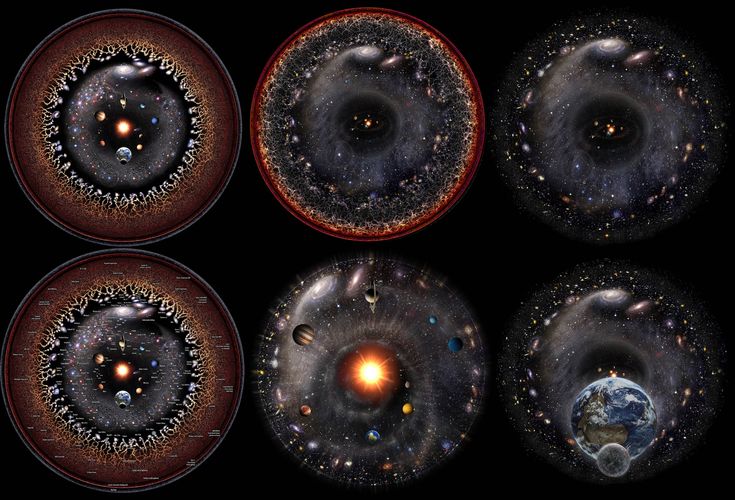
The possibility of hidden dimensions forces us to reconsider the nature of the universe itself. What we perceive may be only a fraction of a far richer cosmic structure, one where gravity reveals the deeper architecture of reality.
As research continues, the study of hidden dimensions of the universe stands at the intersection of cosmology, particle physics, and philosophy, reminding us that the universe may be far stranger — and more beautiful — than it appears.
This article is part of Ambuzzway Astronomy coverage, exploring breakthroughs in cosmology, physics, and emerging scientific theories. Reporting is based on analysis and explanations originally published by Universe Today, with commentary from physicists studying large extra dimensions and the hierarchy problem.