Jane Boleyn has long been cast as the villainess of the Tudor age—the “wicked wife,” a schemer, perhaps a spy, whose alleged treacheries helped doom her husband George Boleyn, her sister-in-law Anne Boleyn, and later Catherine Howard. But how much of that image rests on hard evidence, and how much on centuries of storytelling, misogyny, and political convenience? In the lethal theatre of Henry VIII’s court, proximity to power was both opportunity and trap. This article re-examines Jane Boleyn through the surviving record, the evolution of her reputation, and the renewed scrutiny of modern historians and novelists alike.
Jane Boleyn at a glance
• Focus figure: Jane Boleyn (Viscountess Rochford), born Jane Parker c. 1505
• Origins: Daughter of Henry Parker, 10th Baron Morley, a learned courtier and translator
• Arrival at court: Around age eleven, as maid-of-honour to Katherine of Aragon
• Marriage: George Boleyn (brother to Anne Boleyn), 1520s
• Court service: Lady-in-waiting to multiple queens, including Anne Boleyn and Catherine Howard
• Death: Executed at the Tower of London, 13 February 1542
• Reputation: Branded by later writers as “the most hated woman in Tudor England,” a label now under challenge
Why Jane Boleyn still matters
Jane Boleyn sits at the hinge of several of the Tudor era’s most sensational crises: the orchestrated downfall of Anne Boleyn, the annihilation of George Boleyn, and the tragedy that engulfed Catherine Howard and Thomas Culpeper. In each story, Jane appears not only as a witness but as an alleged catalyst. That positioning helped her become a convenient lightning rod for blame. Yet a careful review suggests the confident condemnations don’t match the fragmentary, coerced, or politicized nature of the sources. Re-evaluating Jane Boleyn is not an exercise in rehabilitation for its own sake; it’s a case study in how reputations—especially women’s—are made, weaponized, and mythologized.
Who was Jane Boleyn?
Born Jane Parker around 1505, she grew up in a cultured household. Her father, Lord Morley, moved easily in humanist circles and rendered Italian Renaissance texts into English for the court. Jane’s own entry into royal service came early; she was appointed maid-of-honour to Katherine of Aragon, Henry VIII’s first queen, while still a child. The palace ecosystem into which she stepped prized poise, vigilance, and the deft reading of changing winds. In that environment she first encountered the rising Boleyns.
Around her early twenties, Jane made a highly advantageous match with George Boleyn. It was not yet obvious that his sister Anne would become queen, but the family was already ascendant. Jane, now Viscountess Rochford, was positioned at the whirring heart of a court where grace and guile were survival tools.
Seeing Jane: the portrait problem
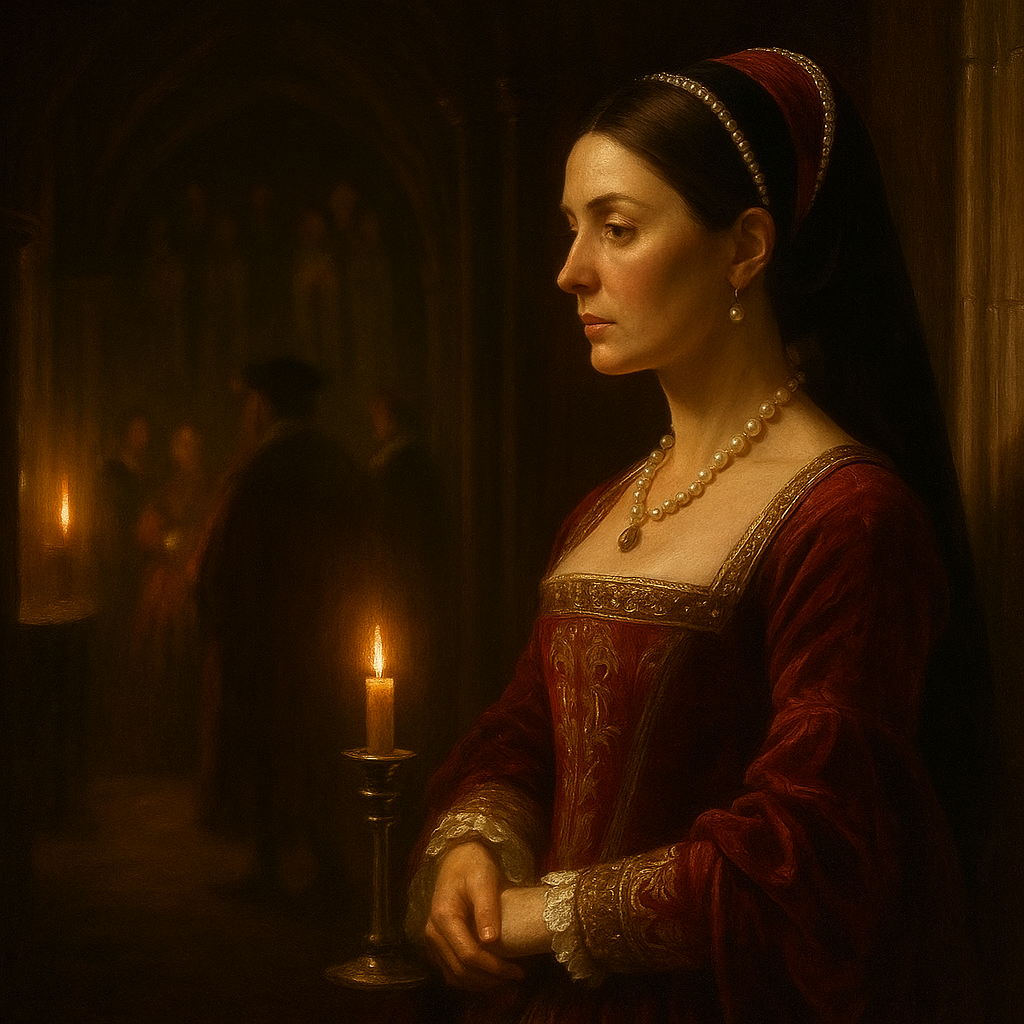
Unlike Anne Boleyn, whose likenesses—contested though some may be—have become iconic, Jane Boleyn left no universally agreed portrait. Scholars periodically propose Holbein sketches—a “Lady Unknown” here, an evocative study there—as possible likenesses. The uncertainty mirrors a deeper research challenge: Jane’s own voice barely survives in the archives. Into this vacuum poured generations of interpreters who mapped their era’s anxieties about women, sex, and ambition onto a woman whose life is documented mostly in other people’s words.
Jane Boleyn and the fall of Anne and George
The watershed year 1536 recalibrated the Tudor political order. Anne Boleyn’s precarious position—exacerbated by the absence of a surviving male heir—met the king’s desire to remarry. The state manufactured a case: a matrix of adultery charges against several courtiers, topped with a spectacular accusation of incest between Anne and her brother George. Somewhere in the subsequent storytelling, Jane Boleyn hardened into the poisonous informer—the jealous wife who supposedly whispered incest to the king.
But the documentary trail is murkier than the drama. We know that members of Anne’s household were questioned under the full pressure of royal will. We do not have a definitive, smoking-gun statement from Jane that single-handedly condemned George and Anne. What we do have is context: a monarch determined to end a marriage and a bureaucracy capable of shaping testimony to fit. The outcome served the crown’s immediate needs; it did not require Jane as mastermind.
Marriage, motive, and retrofitted psychology
Later writers often asserted that Jane’s marriage to George was acrimonious, that she resented George’s closeness to his sister, and that jealousy supplied a motive to betray. Perhaps the marriage had strains; many did, and George, a bright and socially dazzling young man, likely had sharp edges. But turning conjecture into causation is hazardous. Even if Jane disliked aspects of her marriage, the idea that she would choose financial ruin, social vulnerability, and mortal peril by destroying her husband stretches plausibility. Far more consistent with Tudor power politics is that when the king wanted Anne gone, the state obliged—and reshaped the record to make the outcome seem inevitable.
Why Jane returned to court
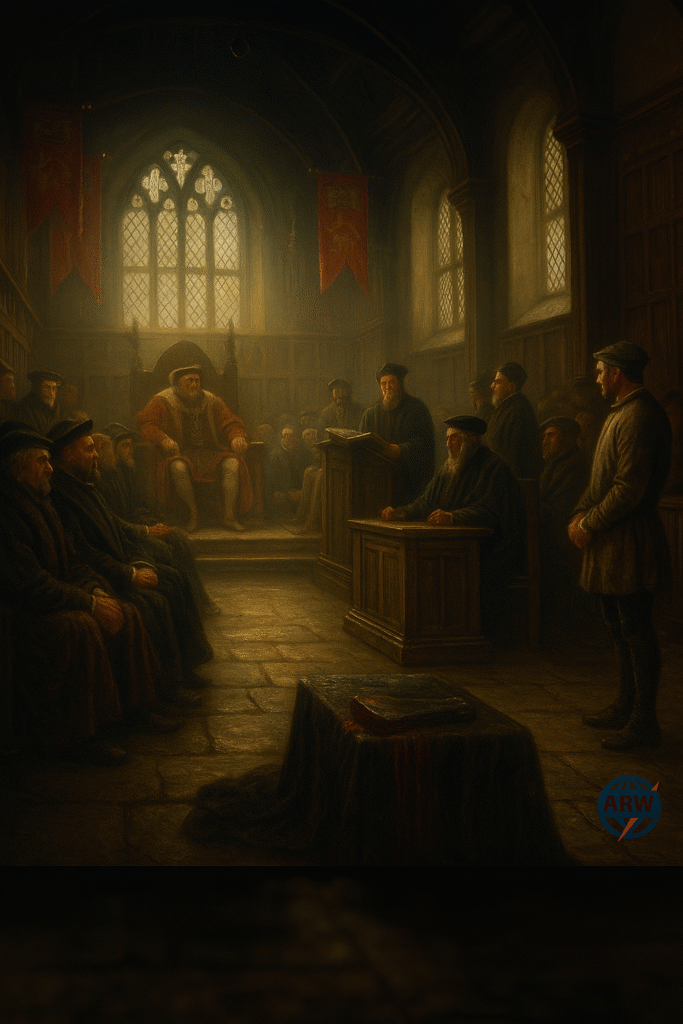
To modern sensibilities, Jane Boleyn’s return to court after George’s execution looks incriminating or, at best, cold-blooded. In the Tudor calculus, it reads as pragmatic. Court was the marketplace for pensions, marriages, offices, and protection. For a widowed gentlewoman, stepping away from that marketplace meant economic precarity. Jane, like many in her position, accepted patronage where it was offered—sometimes from figures later painted as puppet-masters, such as Thomas Cromwell or great magnates of the Howard family.
Labeling this networking “espionage” imports a modern category into a world where patronage naturally entailed information-sharing. The same patrons who propped you up could also abandon you the moment alliances shifted. That’s not unique to Jane Boleyn; it’s the operating system of Henry’s court.
Jane Boleyn, Catherine Howard, and Thomas Culpeper
Five years after Anne’s execution, another queen’s household became the axis of crisis. In 1541, Jane Boleyn, serving Catherine Howard, was accused of facilitating Catherine’s clandestine meetings with the handsome courtier Thomas Culpeper. Lord Chancellor Audley publicly denounced Jane as a “bawd,” a word steeped in sexual contempt and social policing. Under the tightening treason statutes, Catherine’s alleged infidelity became a matter of state security, and those in her orbit were liable to be swept up and condemned.
Did Jane “help” the affair? The probability is that she was present at some meetings. In the etiquette of the time, a lady-in-waiting might chaperone interactions that tiptoed along the edge of courtly love. Presence, however, does not equal pimping. It is completely plausible that Jane hoped to manage risk, or that she complied with requests phrased as commands. None of those nuances altered the trajectory once Henry’s wrath was unleashed. Culpeper was executed first; Catherine and Jane followed on 13 February 1542.
Law, sexuality, and the Tudor state
The prosecution of Jane Boleyn exposes how Tudor law fused the queen’s body to the king’s honour. Statutes expanded treason to cover behaviours around the queen’s sexuality; proximity itself became peril. In such a framework, Jane was pre-condemned: close enough to know, convenient enough to blame, and powerless once the machinery ground into motion. The words used to damn her—“bawd,” “wicked,” “sex-mad”—reverberated through later centuries and calcified into character.
How Jane became “the most hated woman in Tudor England”
The phrase is modern shorthand, not a contemporary indictment. Still, the path by which it took hold is revealing. Early references sometimes present Jane as merely inattentive in her chaperone duties. Victorian writers, anxious about female sexuality, splashed darker colours: Jane as voyeur, as perverse. Early psychoanalytic fashions embellished the myth. Elizabethan politics also had reasons to make Jane the sinner: rehabilitating Anne Boleyn’s reputation under Elizabeth I could be eased by pinning blame for George’s and Anne’s fall on a now-dead relative outsider.
Dramatists and novelists, seeking a clean narrative line, tended to prefer a single human engine of catastrophe over the muddy truth of state power. The jealous wife, the whispering informer, the scheming attendant—these figures are theatrically satisfying. They are also suspiciously tidy in a world where the most dangerous fact was the king’s will.

Modern reappraisals: what historians argue now
Across the past two decades, historians and biographers have combed royal accounts, household lists, interrogations, and petitions to reassess Jane Boleyn. A broad (if not unanimous) pattern emerges:
- The documentary record does not prove that Jane supplied decisive testimony against Anne and George in 1536. She was questioned, like many others, under pressure.
- Her return to court reads as economic necessity. Patronage webs were the lifeblood of aristocratic survival; widows without it were exposed.
- The Catherine Howard disaster reframed conventional court practices as treason. Chaperoned interactions, ambiguous to us, became mortal offenses when the crown needed a purge.
- The vilifying language attached to Jane served patriarchal storytelling needs more than it reflected demonstrable fact.
This reassessment does not canonize Jane. It recovers complexity. She was ambitious—like most who thrived at court. She made risky calculations. She may have trusted the wrong patrons. In another reign, those traits might have meant a comfortable old age. In Henry’s, they delivered her to the scaffold.
Ambition, agency, and the price of proximity
We often prefer passive heroines in the past because active women threaten the tidy moral. Yet ambition was not a vice at Henry’s court—it was the currency of relevance. Jane Boleyn’s movements, alliances, and returns to service signal someone who loved the texture and stakes of court life. That love exacted a high price: constant surveillance, rivalries, and the never-ending puzzle of what the king wanted next.
Reducing Jane to “good” or “bad” smooths over the structural truth. Her life is a study in how coercive systems force people—especially women—into positions where complicity, silence, or minor enabling look like the least dangerous options. When the reckoning came, the record was arranged to flatter the powerful and condemn the dispensable. Jane’s name, not Henry’s will, carried the infamy.
Why women like Jane absorb the blame
Tudor crises routinely offloaded culpability onto women. If dynastic hopes faltered or political strategies shifted, it was queens and their attendants who were recast as moral failures. Jane Boleyn’s legacy exemplifies that pattern. By naming her the “bawd” of Catherine’s household and the “wicked wife” to George, chroniclers converted a sovereign’s choices into a woman’s alleged vices. Across centuries, those labels were updated to fit the times—Victorian prudery, psychoanalytic voyeurism, modern melodrama—while the core convenience remained intact.
Jane Boleyn in popular culture
Novelists and dramatists have been fascinated by Jane Boleyn because she stands at a crossroads of tragedy and intrigue. Popular works have alternately demonized and humanized her. Fiction has every right to invent inner lives; it becomes misleading only when readers carry dramatic certainties back into history as proof. Still, popular attention has also sparked scholarly re-evaluation. Each new portrayal invites the public to ask, “What do we really know?”—a healthy question in Tudor studies, where gaps are many and legends alluring.
Legacy: what remains
Today, the Tower of London houses the chapel where Anne Boleyn, Catherine Howard, and Jane Boleyn lie. The stones collapse rank distinctions that the living court obsesses over: queens and ladies together, remembered not for how perfectly they managed a tyrant’s whims but for how swiftly the state could end them. Jane’s memory persists not because she was pure evil or pure innocence, but because her life illuminates the cruel mechanics by which personal stories are drafted to justify political deeds.
Key takeaways about Jane Boleyn
• Evidence for a decisive betrayal in 1536 is tenuous; the prosecution of Anne and George served royal objectives.
• Jane’s return to court after George’s death aligns with survival strategy, not ghoulish opportunism.
• The Catherine Howard affair shows how treason statutes turned proximity into guilt.
• Gendered slurs—“bawd,” “wicked,” “sex-mad”—are interpretive traps that reveal more about narrators than about Jane.
• Modern historians urge skepticism toward melodramatic certainties in favour of context and the limited record.

FAQs about Jane Boleyn
Was Jane Boleyn truly “the most hated woman in Tudor England”?
The epithet is a later construction. It captures how power’s narratives needed a villain, not a reliable contemporaneous verdict on Jane’s character.
Did Jane accuse George Boleyn of incest with Anne?
There is no definitive document proving that Jane supplied the key accusation. She was interrogated among many; the case reflected the crown’s intentions more than any single statement.
Why did Jane “help” Catherine Howard and Thomas Culpeper?
“Help” is an assumption. Jane likely attended some meetings in a chaperone capacity, a common court practice. Under expanded treason law, that presence became criminalized once scandal erupted.
Was Jane a spy?
“Spy” overstates the norm of information-sharing within patronage networks. Courtiers traded news; patrons expected it. That system could make anyone look complicit when politics shifted.
How should we view Jane today?
As a skilled, ambitious court professional navigating an environment designed to reward obedience and punish miscalculation—especially in women.
Conclusion: seeing Jane Boleyn clearly
Strip away the theatrical labels and Jane Boleyn emerges not as a caricature but as a person bound inside an unforgiving machine. She was ambitious, yes; shrewd, often; fallible, certainly. She also lived in a time when the king’s will resembled fate, and when narratives could be fabricated to sanctify that will. Remembering Jane with nuance is not a gesture of modern sentimentality; it’s an acknowledgment that history, like court, is a place where power decides whose stories get simplified and whose get heard in full.
External Sources & Further Reading (for reference):
• Encyclopaedia Britannica – Jane Boleyn, Viscountess Rochford: https://www.britannica.com/biography/Jane-Boleyn-Viscountess-Rochford
• Historic Royal Palaces (Tower of London) – Jane Boleyn: https://www.hrp.org.uk/tower-of-london/history-and-stories/jane-boleyn/
• The National Archives (UK) – Henry VIII resources: https://www.nationalarchives.gov.uk/education/resources/henry-viii/
• Royal Collection Trust – Hans Holbein the Younger: https://www.rct.uk/collection/people/hans-holbein-the-younger-1497-1543
• BBC History – Anne Boleyn: https://www.bbc.co.uk/history/historic_figures/boleyn_anne.shtml
• HarperCollins UK – Publisher information: https://www.harpercollins.co.uk/
• Philippa Gregory – Official site: https://www.philippagregory.com/