Trump hails Charlie Kirk as martyr
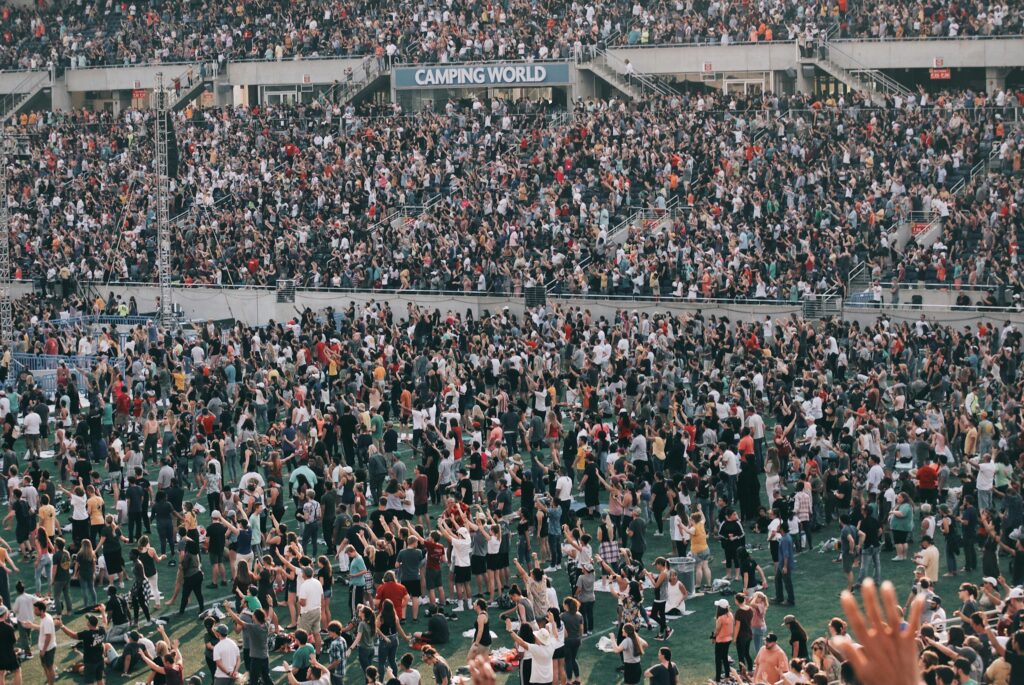
Trump hails Charlie Kirk as martyr in a sweeping, emotionally charged tribute that served as both a memorial and a rallying cry for a conservative movement reckoning with loss, purpose, and momentum. Inside Arizona’s State Farm Stadium near Phoenix, tens of thousands of mourners—many clad in red, white, and blue and sporting Make America Great Again merchandise—gathered for hours to pay their respects to the 31-year-old activist and Turning Point USA co-founder, who was shot and killed on September 10. The sprawling service blended Christian worship with political oratory, underscoring the unique nexus of faith, activism, and electoral battlefield that defined Charlie Kirk’s public life and the movement he helped shape.

The event brought together high-profile figures from the Trump administration and the broader conservative ecosystem. They shared memories, invoked scripture, celebrated Kirk’s organizational achievements, and made clear their belief that his death will galvanize rather than diminish their cause. Throughout the five-hour service, speakers returned to one central motif: that Kirk’s legacy lives on not only in the hearts of those he inspired, but in the institutions and voter coalitions he helped build.
A memorial that felt like a movement’s revival The tone of the event at State Farm Stadium stood at the intersection of remembrance and re-commitment. Christian bands set the mood early, drawing the crowd into extended moments of singing and prayer. As the stage program unfolded, it alternated between deeply personal testimony and muscular political framing—two registers that often converged in Charlie Kirk’s work as a campus organizer, media figure, and adviser across conservative networks. The backdrop of the stadium, packed with a crowd estimated to be in the high tens of thousands, amplified the sense that this was more than a private memorial; it was a statement of continuity for a movement already accustomed to organizing at scale.
Erika Kirk’s message of forgiveness—and a divergence on stage At the emotional core of the ceremony was a raw and moving address from Erika Kirk, who became the new chief executive of Turning Point USA following her husband’s death. Her words traced the arc of shock and heartbreak while ultimately landing on a clear, theologically grounded response: forgiveness. She shared that she had forgiven the alleged shooter, a 22-year-old now charged in the killing, saying that forgiveness honored both her Christian faith and her husband’s own convictions. To a hushed audience, Erika framed that forgiveness not as acquiescence, but as an act of spiritual defiance—refusing to let hate compound hate.

When President Trump followed, he offered an extended tribute that hailed Kirk as “our greatest evangelist for American liberty,” elevating him as a symbol of what Trump called the fight for freedom. Yet Trump also openly diverged from Charlie’s well-documented penchant for engaging rivals and believing in redemption. Trump said he did not share Kirk’s desire to wish the best for his political opponents, a candor that drew laughs and applause in equal measure. The juxtaposition—Erika’s forgiveness and Trump’s emphasis on political combat—captured a long-running tension on the American right between reconciliation and resistance, pastoral counsel and bare-knuckled politics.
Trump hails Charlie Kirk as martyr: rhetoric with a purpose By repeatedly referring to the fallen activist as a martyr, Trump framed the moment within a narrative of sacrifice and legacy—language designed to stiffen resolve and define meaning. Martyrdom in politics is freighted: it invokes honor, stakes, and continuity beyond the individual. At the stadium podium, that rhetoric functioned to transform private grief into public purpose. As several speakers echoed, the best way to honor Charlie’s life was to do what he did: organize, persuade, register voters, show up on campuses, mentor young leaders, and win elections.
From Turning Point USA to national influence Charlie Kirk’s ascent began when he co-founded Turning Point USA at 18, positioning the organization to be a force on college campuses nationwide. Turning Point’s model—rapid response activism, influencer-savvy media, high-energy conferences, and campus debates—transformed the conservative youth landscape. Kirk’s hallmark events encouraged students to challenge him at the microphone, sparking viral clips that found massive audiences on social platforms. Over the years, he became a key voice for conservative youths, known for a message that fused free-market ideals, strong borders, religious liberty, pro-life advocacy, and skepticism of progressive social policies.
Those efforts paid tangible dividends: by the time of his death, he had amassed millions of followers across major platforms, turning influence into mobilization aimed at boosting Republican candidates. At the memorial, senior figures repeatedly made the case that he had “made the winning difference” for the movement’s electoral fortunes, a testament to the institutional power he helped build—and a forecast that his absence would not mean retreat.
JD Vance, administration heavyweights, and a chorus of resolve Throughout the service, high-profile administration officials and movement leaders described how Kirk’s mission shaped their own work. Vice-President JD Vance underscored the enduring potency of the youth movement Kirk cultivated, pledging that the team he built would carry the torch. Other senior figures highlighted how the Turning Point network created new on-ramps for young conservatives—particularly those seeking community and purpose in an era often defined by cultural and political fragmentation.
Speakers framed the loss not as an endpoint but as a charge to step up. “We’ve got it from here,” one said, summing up the prevailing mood. The unabashed partisanship of the event—right down to the stadium chants—reflected an environment where memorial and rally frequently overlap, in part because that is where Kirk himself spent his public life: at the junction of persuasion and performance, conviction and contest.
A handshake seen around the arena: Trump and Elon Musk One moment that ricocheted beyond the stadium was a handshake and brief chat between President Trump and Elon Musk, who had feuded with Trump earlier this year. Musk posted an image of the two together with a simple caption—“For Charlie”—turning a personal loss into a public gesture of unity from a figure whose platforms and statements carry immense cultural weight. The image underscored a broader theme of the day: that alliances, even strained ones, can realign in the face of shared purpose, and that Kirk’s death had created a rallying point across multiple spheres of influence.

Faith, music, and a megachurch atmosphere Well before the speeches, the stadium felt like a hybrid between a megachurch worship service and a high-energy political convention. Christian bands led worship, prompting spontaneous singing and prayer. Attendees reported that the praise-and-worship segments opened the day to a different kind of emotional pitch, setting a stage where grief could coexist with hope and where the personal was inseparable from the political. For many present, that blend of worship and activism mirrored Charlie’s own approach: he made no pretense of separating faith from public life. He believed faith animated civic engagement—and in turn, that civic life required moral clarity.
Trump hails Charlie Kirk as martyr: a rallying cry for conservative youth The phrase “Trump hails Charlie Kirk as martyr” threaded through the day’s rhetoric, amplifying a particular lens on Kirk’s role within the conservative youth movement. To his admirers, he was not only a strategist but also a shepherd of sorts, drawing young men and women into a community that offered moral structure and concrete action steps. Programs, conferences, and campus initiatives under the Turning Point umbrella gave many their first taste of politics as vocation. At the memorial, speakers implored those young activists to resist despair and instead accelerate their organizing, “because that’s what Charlie would have wanted.”
A nation at odds over blame and meaning The event also exposed fault lines that run through the national discourse. Some on the right blamed the political left for a climate of hostility they say made violence more likely; others warned the government’s response to violent threats could become a pretext for overreach. This clash of narratives—who is responsible, what accountability looks like, and where the line between safety and liberty should be drawn—played out both inside the stadium and across social platforms as clips of the memorial were shared widely.
Within that environment, the term “martyr” carries implications beyond commemoration. It can cement identity, amplify grievance, and intensify mobilization. Those dynamics shape how supporters interpret the path forward: for some, it encourages a renewed focus on law-and-order policies; for others, it drives an emphasis on free speech protections and cultural persuasion. For nearly all in attendance, it added weight to the claim that Kirk’s life and death mark an inflection point.
Erika’s example and the politics of grace If Trump’s remarks embodied a combative defense of the movement, Erika’s words modeled another response—unmistakably political in its consequences, but rooted in grace. By naming forgiveness, she set a tone that many faith leaders in the movement echoed: that the answer to hatred is not more hatred, and that mercy is not weakness but strength. In an era that rewards outrage, her testimony suggested that conviction and compassion need not be at odds. Many in the crowd described her address as the most powerful moment of the day, a reminder that the movement’s depth has always included not just policies and protests but also prayer and pastoral care.
Trump hails Charlie Kirk as martyr—and insists history will remember Trump closed his tribute by insisting that history would remember Charlie as a “great of his generation,” a standard-bearer of American liberty whose life will continue to influence national debates about education, speech, culture, and the limits of government power. He praised Kirk’s devotion to steeping young people in constitutional principles and Judeo-Christian ethics, and he promised that the work would go on. The embrace between Trump and Erika at the end of his address served as a visual punctuation mark on a day when grief, gratitude, fury, and faith were all on display.
The alleged shooter and a still-unanswered question Authorities have charged a 22-year-old, Tyler Robinson, with Kirk’s killing. As of this writing, officials have not publicly stated a motive. Robinson faces the possibility of capital punishment. In court and in commentary, the presumption of innocence and due process coexist uneasily with the public’s hunger for answers. At the memorial, speakers deferred to the legal process even as they urged greater vigilance within the movement. The lack of an announced motive leaves open a key question: what specifically drove the act that now reverberates through national politics? For many in the arena, the uncertainty only strengthened their resolve to focus on what they can control—organizing, voter registration, campus outreach, and community building.
Turning Point USA after Charlie: leadership, mission, and continuity With Erika stepping into the leadership role at Turning Point USA, the organization enters a new chapter. Allies described her as the natural successor—someone who understands both the mission and the mechanics of what Charlie built. The stated plan is to double down on the core pillars: campus presence, leadership summits, policy education, and digital-first communications designed to engage young voters where they live—on their phones, in their group chats, and across TikTok- and X-styled attention ecosystems.
The memorial frequently returned to practical commitments: recruit more campus coordinators, expand high school outreach, and train new speakers in the debate-forward model that propelled Charlie to prominence. Leaders emphasized measurable goals—volunteers onboarded, events hosted, registrations completed—alongside broader cultural aims such as safeguarding free inquiry and resisting policies they view as antithetical to religious freedom and parental rights.
The crowds, the colors, the cause Attendees described waiting in line for hours, some camping overnight to secure seats. Inside, the color palette was unmistakable: bright reds, crisp whites, deep blues. Patriots’ iconography—flags, hats, shirts—layered the arena in visual signals of allegiance. If a memorial is meant to reflect the person, this one reflected Charlie’s stages: arenas, auditoriums, campus quads, and the conservative conference circuit. The chants—“U-S-A!” rolling like waves—weren’t just patriotic slogans; they were a way of saying, “We are still here; this work continues.”
Trump hails Charlie Kirk as martyr: free speech, faith, and the next generation Multiple speakers cast Kirk as a champion of free speech, particularly in educational contexts they contend are increasingly hostile to conservative viewpoints. Whether debating on campus or building student chapters, he cultivated a style that was unapologetically direct, and sometimes intentionally provocative, in pursuit of ideological clarity. Critics often accused him of promoting harmful or inaccurate positions on issues like race, crime, and COVID-19, sparking fierce pushback from liberal and progressive circles. Admirers countered that the willingness to take heat was part of what made him effective at energizing disaffected students and giving them a vocabulary for dissenting from campus orthodoxy.
The youth-vote dimension loomed large throughout the service. With midterms and future national races always on the horizon, speakers returned again and again to the importance of translating cultural affinity into ballots. The strategy—part content, part community, part logistics—remains the bedrock of conservative youth mobilization. If Charlie was the face of that approach, the organization he leaves behind is its infrastructure.
Mourning in a megaphone age The reach of the memorial extended far beyond the stadium via live streams and social clips that bounced across feed after feed. In that sense, the event doubled as a media moment: a content engine that recaptured narrative space after a shocking loss. In real time, supporters could access speeches, worship sets, crowd reactions, and the Trump-Musk handshake. The immediacy of the visuals offered a counterweight to speculation or incomplete reporting; it turned the memorial into a distributed experience, not just an event for those physically present.
But the megaphone cuts both ways. Detractors online questioned the conflation of grief with partisan mobilization, arguing that the setting risked politicizing a tragedy. Defenders responded that the political and the personal were inseparable in Charlie’s life; to remove one would misrepresent the man. The back-and-forth highlighted an enduring feature of the post-viral era: every public moment is instantly circled by rival narratives, each vying for the authority to define what a moment “really means.”
Policy, culture, and the conservative playbook Beyond the immediate emotion, the memorial pointed toward the policy and cultural fights ahead. On policy, speakers signaled a focus on crime, immigration enforcement, education reform, parental rights, and health freedom narratives that animated Turning Point’s content lines. On culture, they emphasized religious liberty, the dignity of the unborn, and pushback against progressive gender frameworks. The throughline was continuity: the causes Charlie elevated are the same causes his successors intend to amplify.
Culturally, the event’s tone aimed to normalize the full blend of evangelical worship and political commitment—something familiar within conservative spaces but often misunderstood by outsiders. The service itself taught by example: faith can animate public action, and public action can be framed as faithful witness. For many of Charlie’s followers, that synthesis is not merely acceptable; it’s essential.
Is the movement stronger—or just louder? For supporters, the claim that “angels wept, then turned tears into fire” captured both the pain and the determination of the day. The phrase suggests a catalytic sorrow, one that burns away hesitation and reveals a bright core of purpose. Skeptics might counter that grief can create a short-term rally effect that dissipates with time. Which is right? The answer likely depends on what happens next: are the pledges made on stage translated into durable structures, training programs, and turnout operations? Will the aura of martyrdom bind the coalition more tightly or raise expectations the movement cannot meet? The weeks and months ahead will tell.
Legal process, media scrutiny, and the search for motive Amid the political framing, a legal case proceeds. Investigators have not publicly identified a motive. In the void, theories proliferate. Here, patience and process matter: charges must be tested in court; evidence must be weighed; and the presumption of innocence must stand until a verdict is reached. For a movement used to pushing narrative, resisting the urge to declare certainty may be one of the toughest disciplines. Supporters’ commitment to truth claims will be measured, in part, by their willingness to let the justice system do its work.
The legacy of a debater At his core, Charlie was a debater. He relished the cross-examination, the spotlight’s glare, the intellectual sparring that played out not just to settle arguments but to invite onlookers into a worldview. That format turned him into a character in the American culture war—idolized by some, despised by others. It is unsurprising, then, that his memorial would carry that same theatrical gravity. Even in absence, he made the case one more time: that persuasion is a performance, that ideas are better tested in public, and that young people will show up when asked to be part of something big.
Trump hails Charlie Kirk as martyr—and calls for vigilance In his remarks, Trump also returned to standard themes: calling out crime in American cities, criticizing political opponents, and urging vigilance against what he framed as radical elements on the left. Supporters heard a familiar cadence: this is a struggle for the nation’s soul, and sacrifice will be required. Critics heard what they often hear: rhetoric they believe increases the temperature and narrows the space for compromise. In that tension, modern American politics persists.
A final embrace, a lingering echo The service closed with visuals fitted for the highlight reels: applause cresting, music swelling, Trump and Erika embracing. The images were bittersweet and potent, capturing how public grief can imprint itself on a movement’s memory. As the crowd filtered out—some to flights and carpools, others to local gatherings—the mood hovered between exhausted and uplifted. What remains is work: the mundane and mighty tasks of organizing, persuading, and caring for one another in a polarized republic.
What comes next for Turning Point USA In the coming months, expect Turning Point to:
- Expand campus chapters and student leadership pipelines
- Hold larger leadership summits and intensify training programs
- Invest in digital media output tailored for short-form platforms
- Scale voter registration and turnout operations targeting young adults
- Build partnerships with churches and allied nonprofits to integrate civic education with faith formation
These initiatives reflect a strategic conviction: that the youth vote is not a monolith and that consistent engagement can shift margins in key states. If the memorial was a kind of commissioning, then the next steps will take place in classrooms, student unions, dorm lounges, church basements, and the feeds that shape public imagination.
Trump hails Charlie Kirk as martyr: the line that will be remembered Of all the lines spoken on stage, “Trump hails Charlie Kirk as martyr” is likely to be the one that history books latch onto—because it attempts to translate a tragedy into a template. It is a claim about memory and mobilization, about who is honored and why. Whether that framing contributes to long-term gains or short-term catharsis depends on what follows. Yet for those who filled the stadium, it captured something real: that Charlie’s life mattered to them, and that his absence will change how they live theirs.
External Sources and Further Reading:
- Turning Point USA (official site): https://www.tpusa.com/
- State Farm Stadium (venue information): https://www.statefarmstadium.com/
- Pew Research Center on political polarization: https://www.pewresearch.org/politics/
- Brookings Institution on campus free speech debates: https://www.brookings.edu/
- Elon Musk on X (for public posts and statements): https://x.com/elonmusk
- The White House (for official statements): https://www.whitehouse.gov/
- U.S. Department of Justice (guidance on violent crime and due process): https://www.justice.gov/ Note: Details in this article reflect statements and portrayals made during the memorial service and by event speakers. Law enforcement has not publicly announced a motive for the crime as of publication.