

NATO intercepts Russian warplanes violating Estonian airspace
Estonia says three Russian MiG-31 Foxhound fighter jets crossed into its sovereign skies near Vaindloo Island over the Gulf of Finland and lingered for about 12 minutes without flight plans, transponders, or radio contact—before allied jets scrambled to intercept. Tallinn denounced the breach as “unprecedentedly brazen,” summoned Moscow’s chargé d’affaires, and announced plans to request NATO Article 4 consultations. Alliance officials called the incident “reckless” and highlighted the speed of the response. Reuters+2Sky News+2
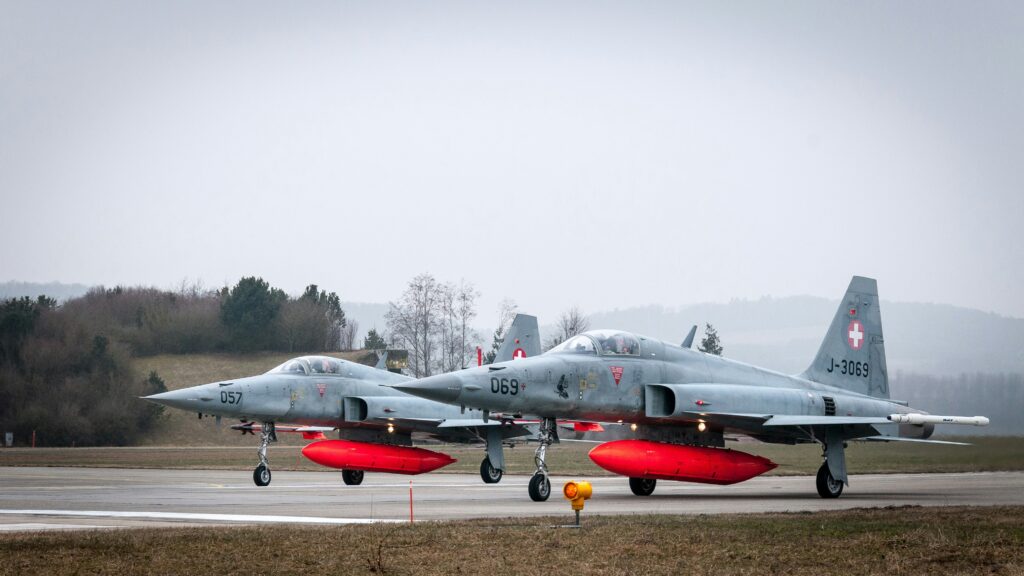
What happened, where, and how fast NATO moved
Estonia’s Foreign Ministry said three MiG-31s penetrated its airspace over the Vaindloo Island area—an islet that sits along a narrow corridor of international and Estonian waters separating the Russian mainland from the Baltic. The jets reportedly flew with transponders off, no filed flight plans, and no two-way radio communication—all classic flags for an air policing alert. NATO’s Baltic Air Policing detachment, with Italian F-35s on quick-reaction alert, vectored to identify and push the aircraft out. AP News+1
NATO spokesperson Allison Hart said the alliance “responded immediately and intercepted the Russian aircraft,” calling it “yet another example of reckless Russian behaviour.” Her message echoed across allied feeds and briefings the same day. CBS News+2X (formerly Twitter)+2
Why this breach matters more than a routine “air policing” scramble
All three ingredients that escalate a Baltic incident were present:
- Depth & duration. A reported ~12-minute incursion—longer than the quick edge-skims regularly contested in public statements—invites both political and military responses. Reuters+1
- Aircraft type. The MiG-31 is a high-speed interceptor with long range; in some configurations it can carry Kinzhal aero-ballistic missiles (unclear here; early media chatter later corrected to “capable,” not confirmed carried). The optics alone elevate allied attention. Fox News
- Context. The violation follows a string of Russian drone incursions into NATO airspace—Poland reported 19 drones crossing its border during a mass attack on Ukraine; Romania detected a drone near the Danube. Both raised readiness and political pressure along the eastern flank. Reuters+1
Estonia’s Prime Minister Kristen Michal said Tallinn would trigger Article 4—the NATO mechanism for urgent consultations when any ally feels its security is threatened. Article 4 has been used multiple times since 2022 to align threat assessments and calibrate collective posture without invoking Article 5’s mutual-defence clause. Reuters

What Article 4 actually does (and doesn’t)
Article 4 is not a war alarm; it’s a political accelerator. It forces the North Atlantic Council to convene, share intelligence, and weigh responses: more air policing sorties, AWACS coverage, air defence rotations, or maritime patrols in the Gulf of Finland. It also signals unity to Moscow without committing to force beyond peacetime missions. Poland invoked Article 4 over the drone wave crossing its airspace; Estonia’s move fits that pattern of “consult first, posture fast.” Reuters
The operational picture: Baltic Air Policing under strain
The Baltic Air Policing mission—run from Ämari (Estonia) and Šiauliai (Lithuania)—has clocked more scrambles since Russia’s full-scale invasion of Ukraine in 2022. Rotational detachments (Italy, Germany, Denmark, France, UK, and others) provide the QRA (Quick Reaction Alert) backbone that met Friday’s breach. The mission’s aim is simple: detect, identify, and escort any non-cooperative aircraft approaching or crossing NATO airspace. When NATO intercepts Russian warplanes violating Estonian airspace, it’s this decades-old framework doing exactly what it was designed to do—just more often, and under more political heat. Reuters+1
Vaindloo’s geography: a narrow, noisy corridor
Vaindloo Island, north of Estonia’s mainland and south of the Russian coastline, is an obvious friction point. It sits near civilian corridors and military routes, where even minor navigation “errors” turn into sovereignty issues. Estonia says the MiG-31s penetrated around five nautical miles into its territory—well beyond the ambiguous grey-zone “edge skims” Russia sometimes claims. With transponders off and no comms, the risk to civil aviation deconfliction also rises, giving Tallinn a second safety argument beyond pure sovereignty. Reuters+1
Moscow’s silence—and Tallinn’s language
By press time, Russia had not publicly commented on the allegation. Estonia’s Foreign Minister Margus Tsahkna called the breach “unprecedentedly brazen,” adding that it was the fourth violation of Estonian airspace in 2025 and urging a “swift increase in political and economic pressure.” EU figures, including Kaja Kallas and Ursula von der Leyen, framed the move as a provocation that must be met with resolve and a stronger eastern flank. AP News+1

Pattern recognition: drones over Poland and Romania
The Polish military says it shot down several Russian drones and tracked 19 crossing into its airspace during a large strike on Ukraine; Prime Minister Donald Tusk called it a “large-scale provocation” and invoked Article 4. Days later, Romania reported detecting a drone near its Danube frontier during Russian strikes on Ukrainian ports. Individually, each incident is contained; collectively, they map a deliberate pressure campaign across NATO’s edge. Reuters
What NATO can do next (menu of options)
- Increase QRA presence and CAP (combat air patrol) hours over the Gulf of Finland—raising the cost of any repeat.
- Surge AWACS/E-3 or A330 MRTT with sensors to improve picture quality and response times.
- Harden air defence nodes in Estonia and Finland and pre-position SAM battery rotations as a message of layered defence.
- Maritime patrol flights (P-8A, Atlantique 2) to watch for correlating Russian naval movements that often accompany aerial probes.
- Joint statements + sanctions calibration—coordination with the EU on economic levers if incursions persist.
The alliance already said it is moving fighters and troops eastwards following the drone incidents, with aircraft from the UK, France, Germany, and Denmark contributing to air defence over Poland. The Baltic sector can be reinforced along the same lines quickly. Reuters
Why MiG-31s set off extra alarms
The MiG-31 is built for speed (Mach 2+), altitude, and reach. It’s a formidable interceptor, not a dogfighter, and is designed to counter bombers and cruise missiles—and, in specific configurations, to carry the Kh-47M2 Kinzhal. While media speculation initially overreached about actual load-outs on Friday, even the possibility of Kinzhal-capable platforms nosing into NATO airspace sharpens allied attention, increases rules-of-engagement discipline, and compresses decision timelines. Fox News
Escalation ladder: from airspace probe to political signalling
Kremlin-adjacent military behaviour follows a familiar ladder:
- Probe with non-cooperative sorties (no transponder, no flight plan).
- Watch for NATO reaction times and intercept tactics.
- Amplify ambiguity (e.g., routes that skirt civilian corridors).
- Message domestically that Russia tests “NATO resolve.”
Tallinn’s Article 4 move flips the script: it internationalises the response, invites shared intelligence, and lays groundwork for coordinated measures—reducing Moscow’s ability to isolate the incident as a bilateral spat. Reuters
Legal frame: what counts as a violation?
Under Chicago Convention norms and state practice, sovereign airspace extends 12 nautical miles from the coastline (including around islands like Vaindloo). A military aircraft entering without permission, with transponder off and no comms, is a breach that states are entitled to answer with interception and escort. NATO’s standard air policing manuals set strict visual ID, wingtip escort, and communication protocols to de-escalate while enforcing the boundary—a playbook used again here. (NATO’s public readout emphasised interception and immediate egress.) CBS News
Information environment: transponders off, narratives on
Estonian media reported the jets flew “dark” (transponders off) in the Vaindloo sector. Russia often argues that such flights keep crews proficient and that brief clips are mischaracterised by NATO. But the duration and depth reported here undercut the “clip the corner” defence. In parallel, allied messaging stressed professional intercept conduct and avoidance of escalation—a signal to both publics that NATO is calm, capable, and in control when NATO intercepts Russian warplanes violating Estonian airspace. Yahoo News
European politics: Brussels closes ranks
EU leaders framed the breach as part of a wider Russian campaign to test limits. Kaja Kallas called it an “extremely dangerous provocation,” while Ursula von der Leyen vowed to “respond to every provocation with determination” and continue investing in the Eastern flank. Expect the European Council to synchronise messaging with NATO’s North Atlantic Council if Estonia’s Article 4 request lands before both bodies in quick succession. Reuters
The Poland & Romania factor: a multi-front eastern flank
In the past week alone, Poland recorded 19 drones entering its airspace and shot down several; Romania tracked a drone as F-16s monitored the Danube border during Russian strikes on Ukrainian infrastructure. Both incidents forced temporary airspace closures and added to public pressure for visible NATO air defence measures that reassure populations living within flight time of Russian platforms. Reuters

Likely near-term steps to watch
- NAC meeting notes referencing Article 4: look for language on enhanced air policing and ISR (intelligence, surveillance, reconnaissance).
- Rotator announcements for Baltic Air Policing (which nation backfills, which extends).
- Joint Allied Air Command updates: more frequent scramble statistics and public intercept imagery to manage the narrative.
- Finnish & Swedish coordination: now in NATO, both may surge sensor coverage across the Gulf of Finland and share tracks with the Baltic trio in near-real-time.
- Moscow’s line: a denial, a claim of “navigation error,” or silence. Silence often means repeat behaviour without comment; denial may signal a short-term pause while rhetoric carries the message.
Bottom line
This wasn’t a near-miss. Estonia reports a multi-ship, multi-minute, transponder-off entry—an action that crosses red lines on safety and sovereignty. NATO’s fast intercept shows the mechanics of deterrence still work. The Article 4 move shows the politics of deterrence are catching up. If probes persist—drones, fighters, or helicopters over Vaindloo—expect more fighters on the line, more sensors in the air, and tighter EU-NATO synchronisation.
For Moscow, the risk of miscalculation rises with every “test.” For Tallinn and its allies, the message is equally simple: when NATO intercepts Russian warplanes violating Estonian airspace, allies respond fast, professionally, and together—and then they talk about what comes next.
Key sources & further reading
- Reuters: Estonia says Russian jets breached airspace for ~12 minutes near Vaindloo; NATO condemns; Estonia eyes Article 4. Reuters
- AP: Three MiG-31s, transponders off; Italian F-35s from Baltic Air Policing responded; Tallinn summoned Russian chargé. AP News
- Sky News / Yahoo / CBS: NATO statement from Allison Hart; Vaindloo location; jets flew dark; immediate interception. Sky News+2Yahoo News+2
- NATO press (X): Official post confirming violation and immediate intercept. X (formerly Twitter)
- Reuters: Poland reports 19 drones crossed airspace; Article 4 consultations activated. Reuters
- The Guardian: Analysis of drone incursions as a Kremlin test of NATO’s resolve. The Guardian
- Fox News Digital: Early reporting on MiG-31 capabilities (Kinzhal-capable clarification). Fox News