
The small English town changed global travel sits quietly in County Durham. Shildon doesn’t grandstand; it doesn’t need to. On 27 September 1825, the Stockton & Darlington Railway (S&DR) first ran a steam-hauled train on a public line here—an audacious experiment that proved rail could move people and freight faster, farther, and cheaper than anything the world had known. That single run cracked open the modern age of mass movement, and its ripples still shape how we plan cities, tell time, and sprint across continents on high-speed tracks. darlington.gov.uk
Walk into Locomotion in Shildon and you’ll feel the weight of that hinge-moment: colliery engines, Victorian rolling stock, and a living atlas of rail’s first two centuries. In 2025, Locomotion anchors the S&DR bicentenary, part of Railway 200, a nationwide celebration stitching together Britain’s rail past and future. It’s more than nostalgia. It’s a reminder that global networks can spring from very local places—and that a coal-county idea can redraw the map of the world. Locomotion+2Railway 200+2
Below are seven concrete ways this small English town changed global travel—and how the legacy still moves millions, daily.
1) It proved steam could power a public railway
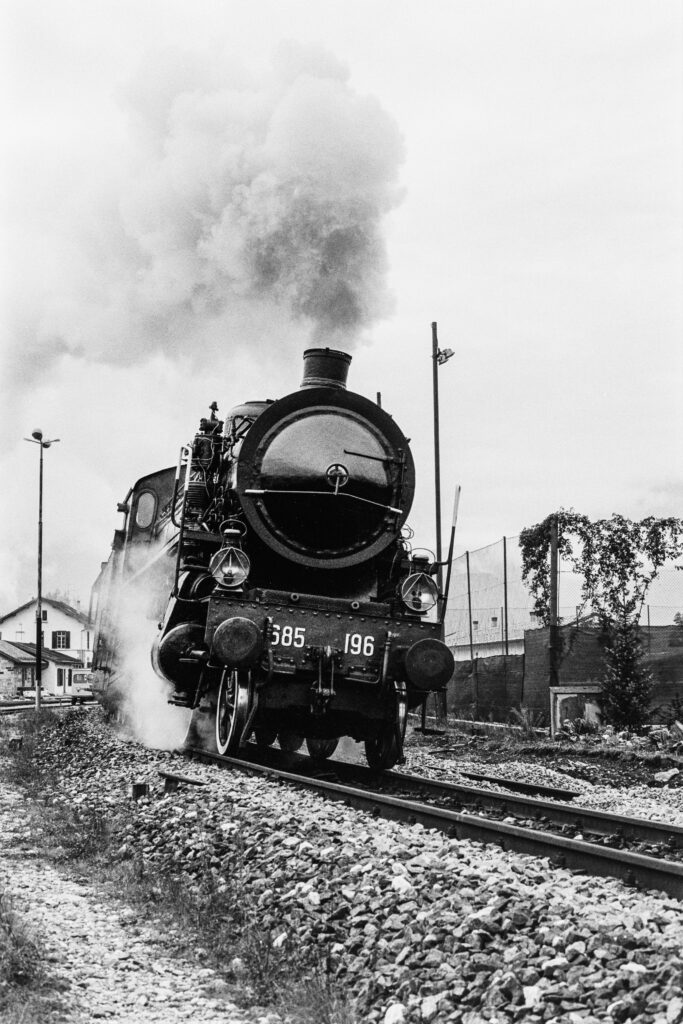
Before Shildon, steam engines pulled wagons on private industrial lines; horses did the rest. The S&DR’s 26-mile route, bankrolled by local Quakers like Edward Pease and engineered by George and Robert Stephenson, changed the frame: steam on a public railway, open to paying passengers and freight. When the inaugural train clattered out in 1825, it didn’t just shift coal; it shifted possibility. The line connected collieries around Witton Park to Darlington and Stockton, fusing industry with access and—crucially—showing other regions exactly how to copy it. darlington.gov.uk
Within a decade, rail mania had erupted. Engineers from Europe and the United States came to study what the Stephensons had done and carried the template home. The “local” S&DR quickly became a global manual. Wikipedia
2) It birthed rail’s everyday architecture: stations, classes, tickets
The earliest S&DR trains mixed horse-drawn coaches with steam, and the original route had slim passenger infrastructure. But usage exploded—30,000+ people rode in the first year of horse-drawn services alone—and the company formalized what we now take for granted: selling tickets at coaching stops, which rapidly evolved into stations; introducing classes of travel; regularizing timetables; and publishing information for the public. The banal magic of boarding at Point A and stepping off at Point B at a promised time—that began its mass adoption here. Wikipedia
One of the earliest surviving nodes in that new architecture stands nearby at Heighington, widely cited by Historic England as possibly the world’s first railway station—further proof that the S&DR didn’t just run trains; it invented the places that make rail legible to humans. Wikipedia
3) It made time mean the same thing in different places
Coaches and canal boats ran on local time; noon was when the sun said so, and every town’s clock told its own story. Rail had a different need: precision. The S&DR’s schedules accelerated Britain toward railway time, an early standardization that eventually aligned with Greenwich Mean Time (GMT) and pushed the world toward time zones. In other words, the habit of planning your day around a clock that matches other people’s clocks—so you don’t miss the 08:12—owes a debt to what started on this line.
4) It engineered landmarks that still work: Skerne Bridge and the Brusselton Incline
Near Darlington, the Skerne Bridge—designed by Ignatius Bonomi—opened with the line in 1825. Two centuries later, it is still carrying trains, recognized by Historic England and celebrated as the world’s oldest working railway bridge. Meanwhile above Shildon, the Brusselton Incline helped engines tackle gradients that once stymied heavy loads, a reminder that early rail was part geology, part genius. You can walk sections of the original route today and watch the industrial landscape become a living classroom. historicengland.org.uk+2historicengland.org.uk+2
5) It set a standard the world still follows
The business end of global rail rests on two rails set 4 ft 8½ in apart—standard gauge. Popular history often credits its spread to the Stephensons’ later Liverpool & Manchester line, standardized and exported with British locomotive building. However you slice the prehistory, the Shildon-to-Stockton crucible and the Stephensons’ practice in the North East entrenched a convention that now underpins most of the world’s passenger and freight networks—and even the world’s largest high-speed grid in China. The distance between rails in Shildon still dictates how bullet trains thread the earth. Encyclopedia Britannica+1
6) It seeded a heritage ecosystem that sustains towns
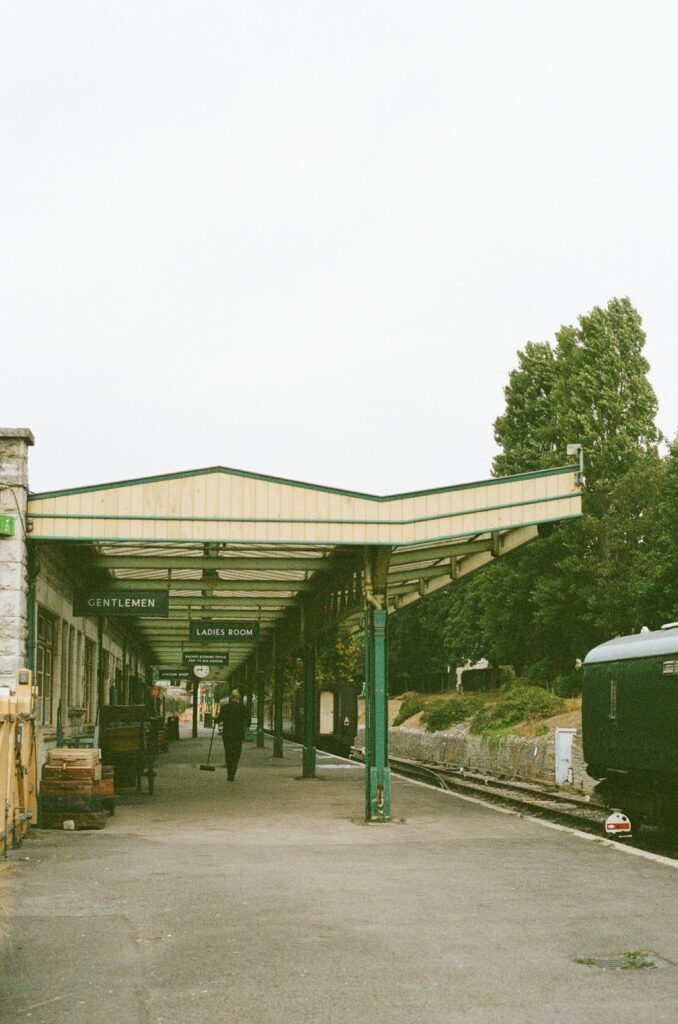
Post-industrial North-East England still carries scars of decline, but the rail story is fueling renewal. Locomotion in Shildon showcases Europe’s largest collections of historic rail vehicles; Hopetown Darlington preserves foundry and carriage-works history; and the emerging S&DR Trail of Discovery will link sites from Witton Park to Stockton Riverside with 26 miles of waymarkers, murals, and information panels. Nationwide, Railway 200 is rallying museums, councils, and communities—211 heritage railways, ~460 stations, ~600 miles—into an economic and cultural force that draws millions. Trains once moved coal; now they move stories, skills, and visitors. Locomotion+2Railway 200+2
7) It showed how a small English town changed global travel
The S&DR wasn’t London or Paris; it wasn’t a palace project. It was a regional coalition—colliery owners, Quakers, engineers—solving a coal problem and accidentally writing a global blueprint. Within a generation, railways laced Europe and North America. Within two, they girdled oceans. In 2025, as Shildon and neighbors like Darlington and Stockton-on-Tees mark 200 years, the point isn’t just to gaze backward; it’s to see how local ingenuity scales into world-systems: standardized gauges, synchronized clocks, reproducible stations, and the expectation that public mobility is a right, not a luxury. Railway 200
How to Walk the Story Today
Start at Locomotion (Shildon). Free entry, deep collection, and bicentenary programming across September. It’s your immersion portal into steam’s social world—union badges, station signs, ticket punches, and the polished brass of identity. Locomotion
Follow the line toward Darlington. Seek out Skerne Bridge and the new Hopetown open-air museum for a tactile feel of shops and sheds that kept the early network humming. historicengland.org.uk
Check Heighington. The station’s fabric tells the awkward, precious truth of beginnings; it has needed love, money, and political will to survive and is often cited as the oldest of its kind. Wikipedia+1
Keep an eye on listings. In this bicentenary year, places like the Cleveland Bay in Eaglescliffe—touted as the world’s first purpose-built railway pub—are getting listed and celebrated, adding fresh waypoints to a trip that keeps expanding. The Guardian
Why It Still Matters
Rail is having a complicated century: decarbonization pressures, ageing assets, and new expectations about accessibility and equity. That’s exactly why Shildon’s story resonates. The first public steam railway was a systems breakthrough—technology, finance, labor, and user experience knitted together. If we want twenty-first-century mobility that is cleaner, cheaper, and more human, we’ll need the same cross-disciplinary imagination the S&DR embodied in 1825.
And we’ll need places like Shildon—not just to conserve vintage iron, but to teach how networks get built, how standards get agreed, and how quiet towns can send shockwaves through the world.
Practical Trip Notes (quick)
- Locomotion (Shildon): Open daily; check Bicentenary Weekend events (20–28 Sep). Free entry; allow 2–3 hours minimum. Locomotion+1
- Hopetown Darlington: New open-air museum on historic carriage-works grounds; collection of ~30,000 artifacts (tickets, signs, tools).
- S&DR Trail of Discovery: A 26-mile walking/cycling route under development, linking Witton Park → Shildon → Darlington → Stockton Riverside.
- Railway 200: National calendar of talks, rides, steam days, and listings—perfect for building a week-long itinerary around the North-East and beyond. National Rail
External sources to cite/link
Origins & opening (27 Sept 1825), “first public railway to use steam locomotives”
- Darlington Council—official overview of the S&DR and opening date. darlington.gov.uk
- Institution of Civil Engineers—project history and “first line” details. Institution of Civil Engineers (ICE)
Locomotion museum (Shildon) & bicentenary events
- Locomotion (National Railway Museum), Shildon—museum home page, bicentenary weekend. Locomotion
- Locomotion—What’s On / Visit information. Locomotion+1
S&DR200 festival (regional celebration) & Railway 200 (national campaign)
- S&DR200 official site—festival background and route (Shildon–Darlington–Stockton). Stockton and Darlington Railway
- Railway 200—national anniversary campaign. Railway 200+1
- House of Commons Library—plain-English briefing on Railway 200 and why the S&DR matters. House of Commons Library
- Network Rail—Railway 200 wins VisitEngland tourism award. networkrailmediacentre.co.uk
Key heritage sites on the line
- Skerne Bridge (Darlington): Historic England listing—oldest purpose-built railway bridge still in use (1825). historicengland.org.uk+1
- Heighington / “Locomotion No.1 Inn” site: Historic England “Heritage at Risk” entry (proto-station, 1826–27); news coverage calling it the world’s oldest station. historicengland.org.uk+2The Guardian+2
- Brusselton Incline: Historic England listing (Stephenson’s 1825 main line feature). historicengland.org.uk
- Middlesbrough as first planned railway town: Port of Middlesbrough history page. portofmiddlesbrough.com+1
Heritage railway scale in Britain (for your stats box)
- Railway 200 “About”: 211 heritage railways, ~600 miles, ~460 stations; 13m visitors, 22k volunteers, 4k staff. Railway 200
- Heritage Rail APPG briefing (staff/volunteers/economic value). theheritagealliance.org.uk
- Heritage Railway Association snapshot (≈170+ operational lines; ~600 miles; ~460 stations). HRA
Standard gauge & global spread (incl. China HSR)
- Britannica—standard gauge at 4 ft 8½ in and Stephenson’s role/Liverpool & Manchester. Encyclopedia Britannica
- Wikipedia (well-maintained overview)—standard gauge & adoption; China Railway High-speed uses 1,435 mm. Wikipedia+1
Railway time → standard time / time zones
- Royal Museums Greenwich—GMT and national adoption. Royal Museums Greenwich
- “Railway time” explainer—railway standardisation on GMT (1840s-1847+). Wikipedia
- Science Museum—how rail + telegraph drove standard time. Science Museum
Extra (news & heritage context during the bicentenary)
- Historic England aerial perspective on the S&DR—Skerne Bridge context. historicengland.org.uk
- The Guardian—recent heritage listings tied to the bicentenary. The Guardian