
Russian aerial attack leaves at least three civilians dead and more than 30 injured across multiple regions, Ukrainian officials say, in what Kyiv describes as a massive overnight barrage aimed at intimidating civilians and degrading critical infrastructure. As both Ukraine and Russia report dueling strikes—including hits on oil refineries in Russia and a residential tower in Dnipro—the Russian aerial attack underscores a dangerous escalation that now touches airspace, energy assets, and dense urban areas. With claims and counterclaims mounting, and NATO members voicing alarm over recent airspace incidents, the latest Russian aerial attack raises urgent questions about civilian protection, international law, and the trajectory of a grinding war now entering yet another perilous phase.
Key takeaways at a glance
– At least three people killed and 30+ injured in the latest Russian aerial attack, according to Ukraine’s president.
– Ukrainian officials say multiple regions were hit; video verified by independent media shows a missile strike in Dnipro.
– Ukraine’s air force claims Moscow launched hundreds of drones and missiles; Russia says its “massive strike” used precision weapons to hit military-industrial targets.
– Russia reports four deaths in Samara after a Ukrainian drone strike; Kyiv says it targeted a major oil refinery there and another in Saratov.
– NATO concerns grow after Estonia alleges a significant airspace violation; Poland and Romania also reported drone incursions earlier this month, claims Russia denies.
– Diplomatic backdrop intensifies, with plans for high-level meetings on the sidelines of the United Nations General Assembly.
What Ukraine says about the Russian aerial attack
Ukrainian authorities depict the Russian aerial attack as part of a deliberate campaign designed to sow fear while degrading energy and industrial infrastructure. According to public statements, the barrage stretched across Dnipropetrovsk, Mykolaiv, Chernihiv, Zaporizhzhia, Poltava, Kyiv, Odesa, Sumy, and Kharkiv regions. Officials allege that residential neighborhoods and civilian facilities were among the sites struck.
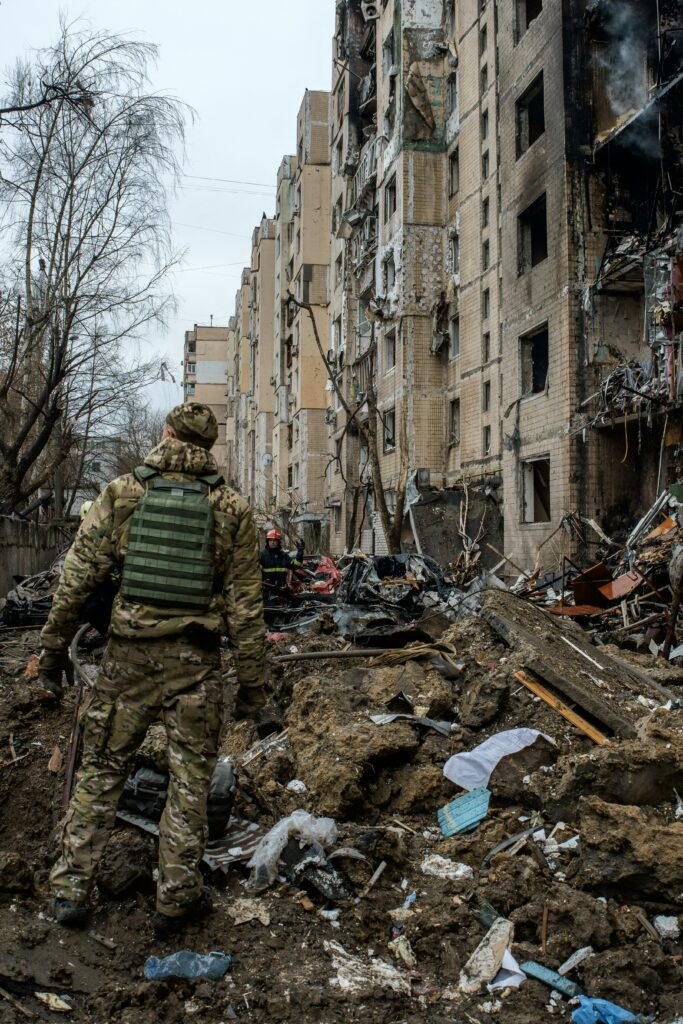
In Dnipro, Ukrainian leaders said a missile carrying cluster munitions directly struck a high-rise residential building. The assertion is particularly significant because cluster munitions fragment into multiple bomblets, which can spread destruction over a wide area and create long-lasting hazards. Independent media verified footage showing a missile in flight and an impact, alongside photographs of extensive damage to a residential structure in Dnipro. While such verification corroborates that an attack occurred, the precise munitions used and intended targets remain matters of contention between the parties.
How big was the Russian aerial attack? By the numbers
Ukrainian military officials characterized the latest Russian aerial attack as one of the largest in recent months. They said Moscow launched hundreds of drones and missiles as part of a sweeping strike package. Although exact figures are difficult to confirm amid ongoing hostilities, Ukraine’s air force cited extensive use of various long-range systems and one-way attack drones. The intensity of the Russian aerial attack suggests a combined-arms approach designed to overwhelm air defenses, penetrate urban centers, and strike critical energy and industrial nodes.
Russia, for its part, framed the operation as a precision strike targeting military-industrial facilities vital to Ukraine’s war effort. Such claims recur throughout the conflict: one side frames strikes as lawful attacks on legitimate military targets, while the other documents damage to civilian areas and life-critical infrastructure. Parsing these narratives requires careful verification, site-by-site analysis, and an understanding of how dual-use facilities—such as power plants or rail hubs—complicate the picture.
Where the Russian aerial attack hit hardest
The Russian aerial attack generated reports of damage and casualties across numerous Ukrainian regions. Dnipropetrovsk region featured prominently due to the Dnipro high-rise strike. Kyiv, Odesa, Kharkiv, and other major urban centers were also named among the targets. In cities with large civilian populations, the margin for error narrows considerably: even a strike intended for a legitimate military objective can have devastating second-order effects if it lands nearby or fragments across residential blocks.
– Dnipro: The residential tower strike and images of severe damage galvanized attention and emergency response. First responders reported fires, shattered facades, and debris-littered streets in the immediate aftermath.
– Kyiv: Ukraine referenced recent strikes, including an earlier hit on a central government building, alleging the use of a sophisticated cruise missile system. Urban targets in the capital continue to underscore the vulnerability of political and administrative centers.
– Odesa and Mykolaiv: These southern ports and industrial hubs have repeatedly faced bombardment during the war due to their logistical value, energy infrastructure, and proximity to the Black Sea.
– Kharkiv and Sumy: Border-adjacent regions often bear the brunt of artillery, missile, and drone incursions due to their geography and the density of transport and industrial facilities.
Russia’s version of the Russian aerial attack
Moscow’s defense ministry cast the Russian aerial attack as a lawful, precision campaign aimed at degrading Ukraine’s military-industrial capacity. By this account, the operation focused on production sites, storage depots, and logistical nodes that feed the Ukrainian war effort. Russia’s description emphasizes controlled targeting and the avoidance of non-military sites, though images from Ukraine—along with third-party verifications of damage to civilian structures—fuel ongoing disputes about conduct, compliance with international humanitarian law, and proportionality.
In modern conflicts, competing narratives are the norm. Precision guidance reduces error, but it does not eliminate it—particularly when urban landscapes, mobile launchers, integrated air defenses, and decoys complicate the picture. The fog of war, especially during a sweeping Russian aerial attack, makes definitive conclusions difficult without detailed forensic analysis.
Ukrainian response and cross-border strikes after the Russian aerial attack
As the Russian aerial attack unfolded or in its aftermath, Ukraine continued a pattern of cross-border strikes targeting energy and industrial infrastructure inside Russia. Kyiv said its drones hit a major oil refinery in Samara and damaged another in the neighboring Saratov region. Russia’s Samara governor reported that four people were killed and another injured amid what he described as an attack by enemy drones.
Ukraine has consistently argued that oil refineries and associated logistics are legitimate military objectives because they supply fuel, lubricants, and other materials to Russia’s armed forces. The strategy aims to raise the costs of war, strain supply chains, and limit Russia’s operational tempo. Russia condemns such operations as terrorism or unlawful attacks on civilian infrastructure, particularly when they reportedly lead to deaths on its territory. The legality and ethics of these strikes hinge on whether the facilities are being used to support military action and whether attackers take feasible precautions to minimize harm to civilians—issues that are hotly contested and fact-specific.
International fallout from the Russian aerial attack: NATO airspace and regional security
The Russian aerial attack coincided with rising tensions around NATO’s borders. Estonia requested urgent consultations with alliance partners after accusing Russian jets of violating its airspace for approximately 12 minutes before interception. Russia denied any violation. Earlier this month, Poland and Romania—both NATO members—also reported that Russian drones had crossed into their airspace, prompting protests and heightened alert postures. These episodes, unfolding near the alliance’s eastern flank, exacerbate fears of miscalculation and unintended escalation.
For NATO, the stakes are high: accidental or deliberate airspace incursions test crisis management protocols and collective defense commitments. For frontline states such as Poland, Romania, and the Baltic nations, each alleged incursion triggers debates about air defense readiness, rules of engagement, and the deterrent credibility of rapid response forces. The broader context of a large Russian aerial attack on Ukraine—and Ukraine’s responsive drone operations—adds complexity to already tense boundary zones along the alliance’s eastern perimeter.
Political backdrop to the Russian aerial attack: diplomacy amid escalation
Diplomatic efforts continue alongside the violence. Ukraine’s leadership indicated plans to meet U.S. President Donald Trump on the sidelines of the United Nations General Assembly in New York. Reports also referenced a prior Trump meeting with Russian President Vladimir Putin in Alaska aimed at exploring ways to end the conflict; no agreement emerged from that encounter. Whether upcoming conversations produce meaningful de-escalation remains uncertain, especially as the Russian aerial attack cycle intensifies and both parties continue to trade cross-border blows.
For diplomats, the challenge is stark: how to interrupt a feedback loop in which every Russian aerial attack prompts Ukrainian strikes on Russian infrastructure, which in turn provokes additional Russian operations. Without confidence-building steps, verifiable arrangements for civilian protection, and credible pathways to address core security concerns, episodes like the latest Russian aerial attack risk becoming part of a new, unstable normal.
Why a Russian aerial attack targets infrastructure—and why civilians still pay the price
Modern warfare often blurs lines between purely military and dual-use assets. Rail junctions, power plants, oil depots, ports, bridges, and industrial complexes can serve both civilian and military functions. In this environment, planners executing a Russian aerial attack may view certain infrastructure as legitimate targets if they support military logistics. However, strikes on dual-use nodes can cause cascading effects on civilian life, from blackouts and water shortages to disrupted medical services and interrupted heating systems—especially dangerous as seasons change.
International humanitarian law requires distinction, proportionality, and precautions in attack. Both the frequency and scale of a Russian aerial attack complicate these obligations: saturation tactics can strain targeting discipline, and debris or falling interceptors can also harm civilians. Allegations of cluster munitions use—raised in the Dnipro incident—further heighten concerns. These weapons are controversial because unexploded submunitions can linger, posing threats long after the initial strike. Each reported use sparks renewed calls for restraint and thorough investigations.
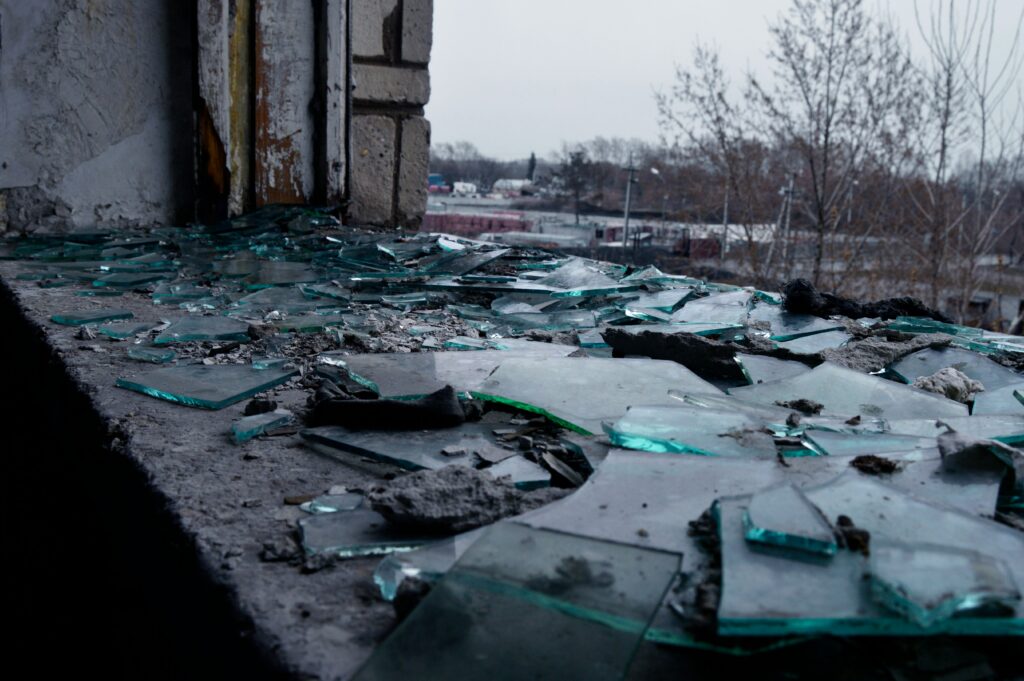
How Ukraine defends against a Russian aerial attack
Ukraine’s layered air defense includes legacy Soviet systems, newer Western platforms, and a growing network of mobile teams countering low-flying drones. During a large Russian aerial attack, Ukrainian defenders must rapidly prioritize threats: cruise missiles, ballistic missiles, and one-way attack drones require different sensors, interceptors, and engagement envelopes. The attacker may stagger launches, vary flight paths, and employ decoys to saturate radars and deplete interceptor stocks. For civilians, air raid alerts and shelter protocols remain the first line of defense when a Russian aerial attack breaches local skies.
At the same time, Ukraine’s drone and missile operations into Russia aim to force trade-offs: allocate more air defenses to refineries, depots, and industrial plants, or leave them less protected to prioritize front-line troops and military bases. This cat-and-mouse dynamic is now entrenched, with each Russian aerial attack met by attempts to impose costs deeper inside Russia’s territory.

Human impact of the Russian aerial attack: life between sirens
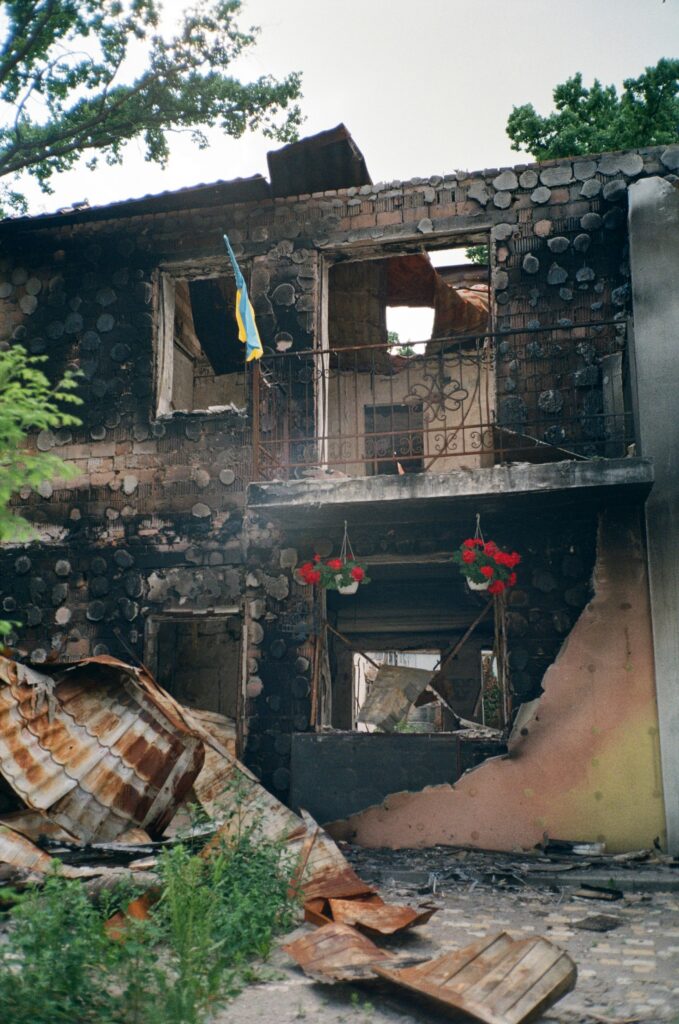
Behind every statistic are communities facing loss, trauma, and uncertainty. The Russian aerial attack turning night into firestorms across city blocks leaves families displaced, schools shuttered, and hospitals strained. Emergency crews navigate rubble and secondary hazards—gas leaks, live wires, unexploded ordnance—to pull survivors to safety. Volunteers distribute blankets, water, and food while local authorities assess structural stability of damaged buildings. In winter and shoulder seasons, power disruptions can be especially punishing, depriving households of heat and rendering elevators, water pumps, and medical equipment inoperable.
In Dnipro and other cities affected by the Russian aerial attack, the cleanup is only the beginning. Insurance markets, legal claims, and reconstruction logistics lag behind the immediate urgency of restoring shelter and restoring basic services. For children, recurring air raid alarms and the sight of shattered neighborhoods become formative memories. For the elderly and disabled, evacuation and sheltering pose acute challenges—a problem multiplied when a Russian aerial attack targets densely populated urban cores.
Information warfare around the Russian aerial attack
Conflicts in the digital era collide with narratives and counter-narratives. After a Russian aerial attack, officials and influencers on both sides move quickly to frame the event: one side highlighting civilian harm, the other underscoring alleged military precision. Independent verifications—satellite imagery, geolocation of videos, and open-source munitions analysis—provide important checks, but they take time. In the interim, the viral life cycle of claims hardens public opinion and informs policy responses. This environment makes transparency and patience crucial for anyone seeking to understand what, where, and why a particular Russian aerial attack unfolded as it did.
NATO risk calculations after the Russian aerial attack
For NATO, the immediate concern is preventing spillover. Even if a Russian aerial attack is not aimed at alliance members, debris, navigation errors, or spoofing can cause incursions. Each allegation—like Estonia’s reported airspace violation—forces quick decisions about intercepts, diplomatic demarches, and public messaging. The alliance’s credibility rests on consistent enforcement of borders without escalating into direct conflict. The risks are not theoretical: earlier reports from Poland and Romania of drone incursions prompted urgent reviews and remedial steps to shore up defenses.
Energy security after a Russian aerial attack on infrastructure
Strikes on refineries and power systems reverberate beyond battlefields. A Russian aerial attack that significantly reduces refining capacity can tighten regional fuel supplies, disrupt agricultural cycles, and elevate transport costs. Meanwhile, attacks that down power lines or damage transformers fuel rolling blackouts, affecting data centers, manufacturing lines, and cold-chain logistics. For Ukraine, contingency planning has become routine: pre-positioning transformers, repair crews, and mobile generators; reinforcing grid segments; and diversifying energy imports when possible. Russia, too, must adapt if refineries face repeated disruptions, diverting resources to protection, repair, and distribution workarounds.
Legal and ethical debates reignited by the Russian aerial attack
Every Russian aerial attack reopens fundamental questions: What constitutes a lawful target? When do dual-use sites cross the line into prohibited attacks? How should parties verify the presence of military objectives near civilian objects? Allegations of cluster munitions use and strikes on apartments or government buildings demand impartial investigations. Even in high-intensity warfare, the laws of armed conflict remain binding. The extent to which parties demonstrate feasible precautions, proportionality, and distinction shapes international perceptions—and can influence diplomatic support, sanctions policy, and aid flows.
The role of technology in a Russian aerial attack
Drones and precision missiles dominate modern battlefields because they offer reach, persistence, and flexibility. A Russian aerial attack may integrate different assets to overwhelm defenses: swarms of one-way drones to soak up interceptors, cruise missiles hugging terrain, and ballistic missiles exploiting speed and altitude. Electronic warfare—jamming, spoofing, and cyber—adds another layer, complicating command and control and disrupting communications. For defenders, integrating radar, infrared sensors, and human spotters into a coherent picture is both art and science.
Urban resilience strategies for surviving a Russian aerial attack
Civic planners and residents have learned painful lessons. To cope with the periodic shock of a Russian aerial attack, cities have:
– Hardened critical nodes like substations and water plants.
– Expanded shelter networks in metro stations, basements, and purpose-built bunkers.
– Distributed backup power sources and mobile clinics to maintain essential services.
– Trained volunteer brigades in first aid, fire suppression, and search-and-rescue basics.
– Implemented communication redundancies—sirens, SMS alerts, and radio—for when networks falter.
These steps do not eliminate the threat posed by a Russian aerial attack, but they reduce the lethality of each strike and speed recovery.
Timeline threads connected to the Russian aerial attack
The latest Russian aerial attack sits within an evolving timeline:
– Earlier this month: Kyiv reported that a central government building in the capital was hit by what it identified as a Russian Iskander cruise missile, highlighting continued risk to political centers.
– July: A sustained Ukrainian drone campaign forced the temporary closure of all airports serving Moscow, signaling Kyiv’s intent to extend pressure deep into Russian airspace and logistics.
– Days ago: Estonia sought urgent NATO consultations over an alleged airspace violation by Russian jets; Russia denied the claim.
– This week: As reported, Ukraine’s leadership aims to meet the U.S. president at the UN General Assembly, while previous high-level contact with Russia did not yield a ceasefire.
Each waypoint adds context to the scale and intent of a new Russian aerial attack, illustrating how military operations, political signaling, and alliance dynamics intertwine.
Media verification and the Russian aerial attack
Verified video and imagery from the Dnipro strike location provide crucial evidence of impact and damage patterns. OSINT analysts typically examine:
– Geolocation: Matching landmarks, road layouts, and building profiles to map coordinates.
– Chronolocation: Using shadows, weather, and metadata to estimate timing.
– Munition signatures: Crater size, fragmentation patterns, and debris to infer likely weapon types.
While OSINT insights improve public understanding, definitive conclusions about a Russian aerial attack often require access to classified sensor data, radar tracks, or on-site forensic analysis. This gap explains why competing narratives can persist for weeks or months.
Public health and environmental risks after a Russian aerial attack
Beyond immediate casualties, a Russian aerial attack may trigger fires, hazardous-material releases, and water contamination. Burning fuel depots and refineries emit toxic smoke; damaged industrial plants can spill chemicals. Health authorities monitor air quality, advise residents on shelter-in-place precautions, and, when necessary, coordinate evacuations. Cleanup is complex: teams must safely remove unexploded ordnance, assess structural integrity, and mitigate environmental harm—tasks that can continue long after headlines move on.
Economic repercussions of a Russian aerial attack
Each Russian aerial attack carries economic costs measured in millions or more. Lost output from damaged plants, emergency repairs to grid infrastructure, and business interruptions add up quickly. Insurance claims surge, and small businesses struggle to maintain payrolls. For households, repairs drain savings, while displacement strains family budgets. Governments weigh short-term relief—cash assistance, utility subsidies, and loan forbearance—against long-term reconstruction plans that can reshape cities. Investors watch for patterns: if a region faces repeated Russian aerial attack waves, capital may stay sidelined or shift to safer areas, affecting growth prospects for years.
Crisis communications during a Russian aerial attack
Clear public messaging saves lives. Authorities must provide:
– Timely alerts about incoming threats.
– Specific guidance on sheltering and evacuation.
– Updates on power, water, and transit disruptions.
– Verified information about casualties and damage to counter rumors.
During and after a Russian aerial attack, misinformation thrives. A disciplined cadence of official updates—amplified by trusted local media and civil society—helps counter panic and supports orderly response.
What might come next after this Russian aerial attack
Several scenarios could follow:
– Continued tit-for-tat operations: Another Russian aerial attack could prompt renewed Ukrainian strikes on Russian energy infrastructure, perpetuating escalation.
– Tactical pauses: Weather, resource constraints, or diplomatic pressure may induce short-term lulls, though these pauses can be used to reposition assets and rearm.
– Diplomatic tests: Meetings at international forums may yield modest de-escalation steps (humanitarian corridors, deconfliction hotlines, or limited ceasefires), or they may falter if battlefield calculus overrides negotiation incentives.
Given the war’s trajectory, planners in Kyiv, Moscow, and NATO capitals will assume that another Russian aerial attack is likely unless credible mechanisms reduce incentives for aerial escalation.
Practical advice for civilians during a Russian aerial attack
While local authorities are the best source of guidance, general safety practices include:
– Heed alerts immediately: Move to the nearest shelter or interior room away from windows.
– Prepare a go-bag: IDs, medication, water, basic first aid, flashlight, and battery packs.
– Stay low and behind cover: If caught outside during a Russian aerial attack, seek sturdy structures, walls, or terrain depressions.
– Beware of UXO: Do not touch unexploded or suspicious objects; report to authorities.
– Communication plan: Establish check-in schedules with family in case networks fail.
These steps, refined by communities living under the threat of a Russian aerial attack, can mitigate risk and improve outcomes during emergencies.
Accountability and documentation after a Russian aerial attack
Civil society groups and international organizations stress the importance of documenting each Russian aerial attack—recording time, location, munitions remnants, and the status of victims. Such records support potential legal proceedings, humanitarian claims, and historical memory. They also inform donors and reconstruction planners about priorities: which neighborhoods need immediate assistance, how to rebuild to higher standards, and where to place new protective infrastructure.
The broader strategic meaning of the latest Russian aerial attack
Strategically, the latest Russian aerial attack reflects several trends:
– Industrial targeting: Energy and logistics sites remain central to coercive strategies.
– Air defense saturation: Large, mixed salvos stress defender capacity and stockpiles.
– Cross-border tit-for-tat: Strikes inside Russia, especially on refineries, signal reciprocal pressure.
– Political timing: Major strikes often cluster around diplomatic milestones, potentially as leverage or messaging.
– Alliance testing: Airspace incidents near NATO borders probe cohesion and readiness.
None of these trends guarantee a decisive outcome, but together they shape the risk landscape and the cost calculus for all parties involved.
Frequently asked questions about the Russian aerial attack
Q: What did Ukraine report about casualties from the Russian aerial attack?
A: Ukrainian officials said at least three people were killed and more than 30 wounded across multiple regions. Authorities also reported a direct hit on a high-rise residential building in Dnipro.
Q: What does Russia say about the targets of the Russian aerial attack?
A: Russia described the operation as a precision strike focused on military-industrial facilities tied to Ukraine’s war effort. Ukraine disputes this characterization, citing damage to civilian sites.
Q: Did Ukraine conduct strikes inside Russia after the Russian aerial attack?
A: Ukrainian forces said they struck the Novokuibyshevsk oil refinery in Samara and damaged another refinery in Saratov. Russian regional authorities reported fatalities in Samara linked to drone attacks.
Q: How are NATO countries reacting to events surrounding the Russian aerial attack?
A: Estonia requested urgent consultations after alleging a Russian airspace violation, while Poland and Romania recently reported drone incursions. Russia denies these claims. NATO monitors such incidents closely to prevent escalation.
Q: What is the diplomatic context around the time of the Russian aerial attack?
A: Ukrainian leadership indicated plans to meet the U.S. president during the UN General Assembly. Reports of prior high-level contacts with Russia did not yield a ceasefire, and diplomacy continues amid ongoing hostilities.
Q: What can civilians do to reduce risk during a Russian aerial attack?
A: Follow local alerts, use designated shelters, prepare essential supplies, and report unexploded ordnance to authorities. Local guidance should always take precedence.
Conclusion: Why this Russian aerial attack matters now
The latest Russian aerial attack is not merely another headline; it is a snapshot of a conflict that continues to evolve technologically, tactically, and politically. It highlights the fragility of urban life under fire, the strain on energy and industrial networks, and the increasing complexity of deterrence along NATO’s borders. It also underscores a sobering reality: without meaningful steps toward de-escalation and accountability, the cycle of a Russian aerial attack met by retaliatory strikes will endure, raising costs for civilians on both sides of the front line.
As facts are verified and damage tallied, the imperative remains clear: protect civilians, preserve critical services, and pursue pathways—however narrow—toward sustainable security. Until then, each Russian aerial attack will test resilience at home, resolve among allies, and the world’s capacity to manage crises without letting them spiral into broader catastrophe.
Editor’s note
This report synthesizes official statements, regional announcements, and verified media evidence available at the time of writing. Some claims are contested and under investigation. Details may be updated as further verification emerges.
External sources and further reading
– BBC News live coverage of the conflict: https://www.bbc.com/news/world-europe-60506682
– Reuters Russia-Ukraine hub: https://www.reuters.com/world/europe/
– Institute for the Study of War daily updates: https://www.understandingwar.org/
– NATO press releases and briefings: https://www.nato.int/cps/en/natohq/press_index.htm
– NATO air and missile defense overview: https://www.nato.int/cps/en/natohq/topics_49635.htm
– UN OCHA humanitarian updates for Ukraine: https://reports.unocha.org/en/country/ukraine/
– ICRC Geneva Conventions overview (IHL): https://ihl-databases.icrc.org/en/ihl-treaties/gc-iv-1949
– Human Rights Watch on cluster munitions: https://www.hrw.org/topic/arms/cluster-munitions
– CSIS Missile Threat resource: https://missilethreat.csis.org/
– IEA Ukraine energy profile: https://www.iea.org/reports/ukraine-energy-profile
– UN General Assembly portal: https://www.un.org/en/ga/
– IAEM emergency management resources: https://www.iaem.org/
– WHO emergencies guidance: https://www.who.int/health-topics/emergencies
– Berkeley Protocol on digital open-source investigations (OHCHR): https://www.ohchr.org/en/publications/policy-and-methodological-publications/berkeley-protocol-digital-open-source